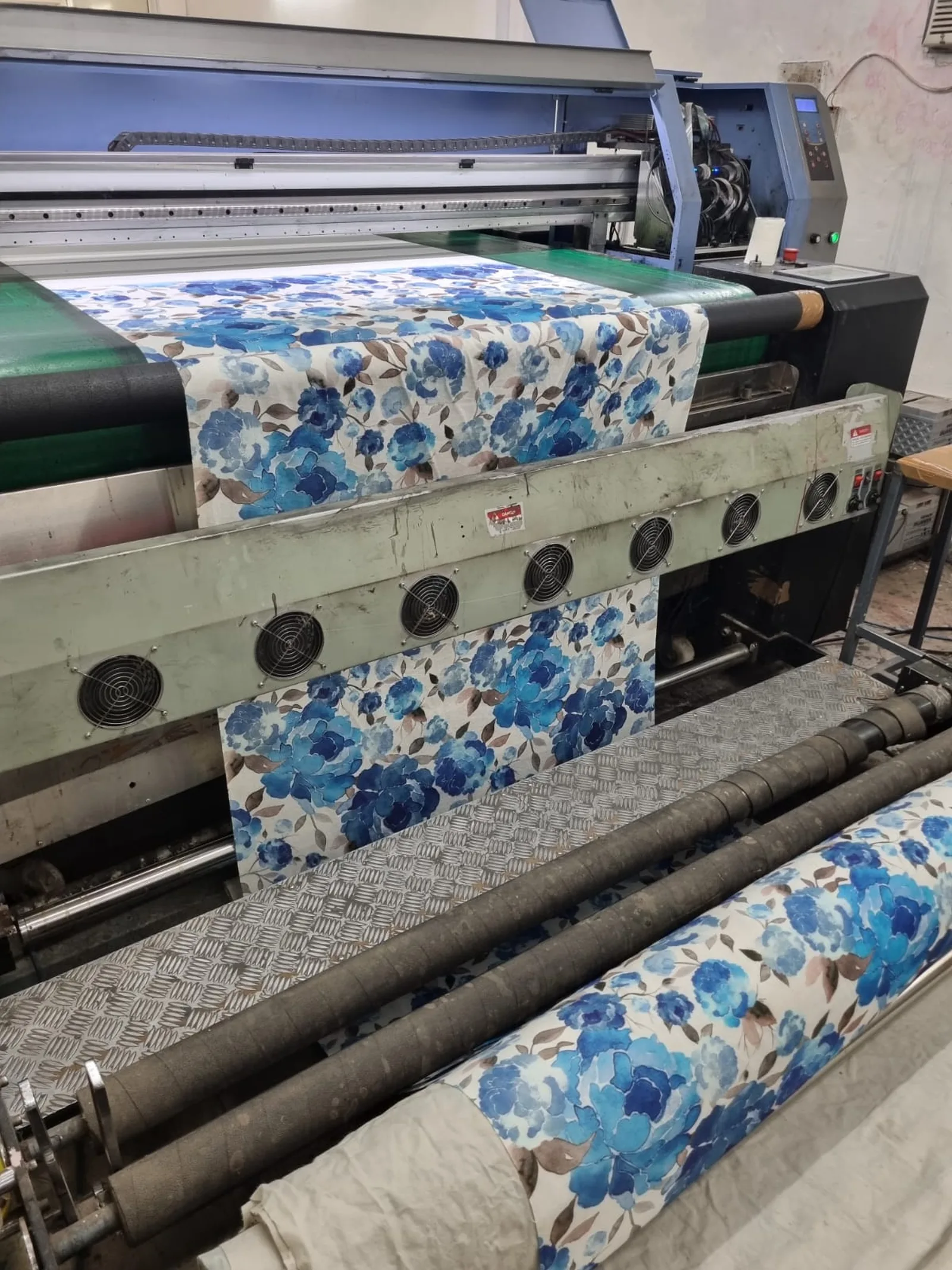
When does direct to fabric make more sense?
Direct to fabric makes more sense when the design runs across the whole piece, or when you need matching panels. Since printing comes first, the colour reaches every seam and hem.
How do direct to fabric and direct to garment compare?
For direct to fabric and direct to garment, the table below sets it out. General differences for planning.
| Point | Direct to fabric | Direct to garment |
|---|---|---|
| Starts from | Roll of cloth | Finished garment |
| Print area | Whole width and length | A platen area |
| Across seams | Yes | No |
| Stitching | After printing | Before printing |
| Best order type | Metres or panels | Single ready pieces |
When does direct to garment make more sense?
Direct to garment makes more sense for a single chest print on a ready t-shirt, one piece at a time. It does not need a cut-and-stitch stage, but the print stops at the seams.
Which route does HM International use, direct to fabric or garment?
We print direct to fabric, on running lengths and engineered panels, and we can then cut, stitch and pack the ready product in-house.