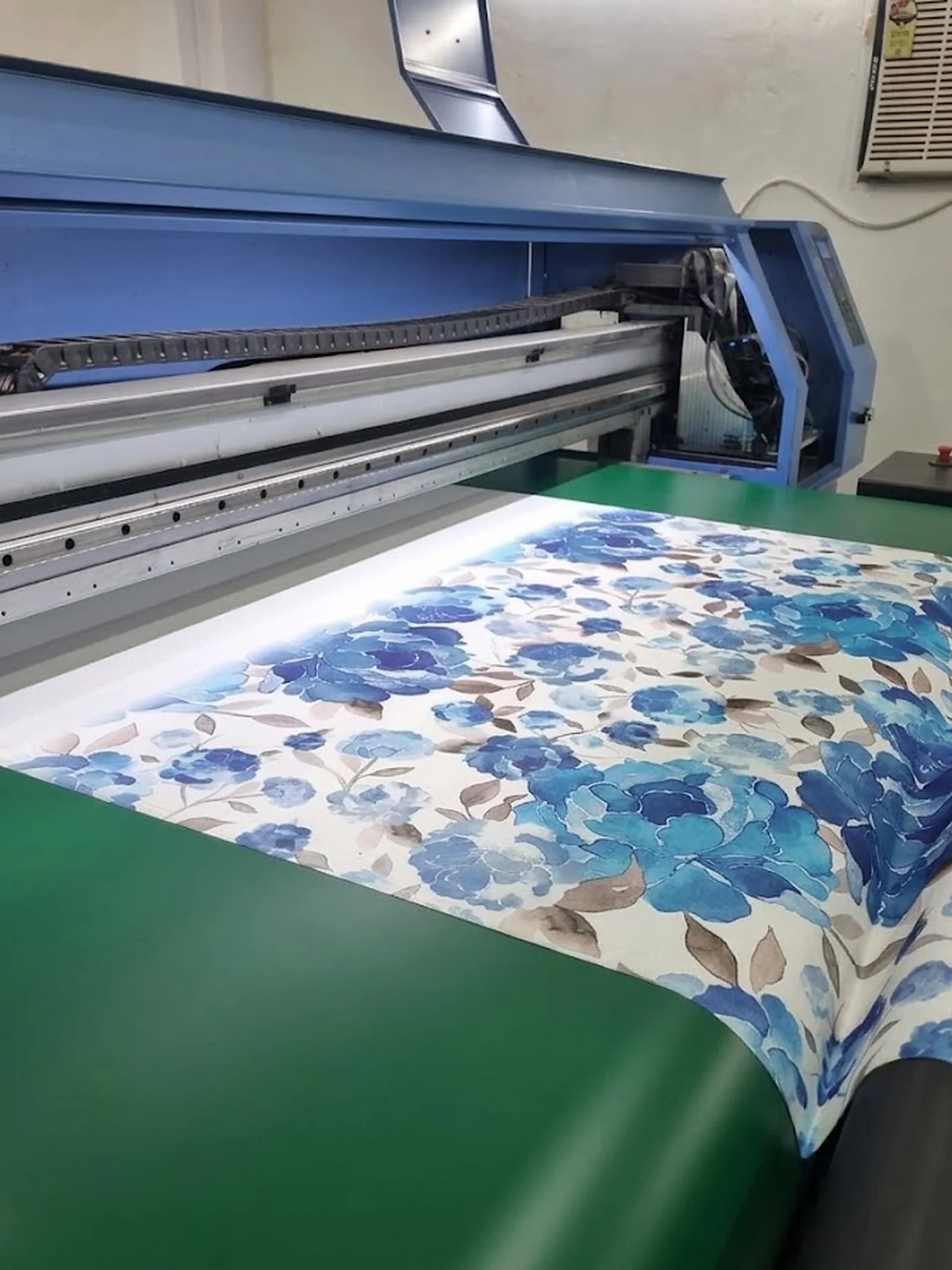
How does direct to film feel compared with digital fabric printing?
Direct to film can be felt as a thin layer on the surface, while a dye print from digital fabric printing keeps the feel of the cloth. On a large area, the film layer also stops the fabric from breathing as freely.
How do digital fabric printing and direct to film compare?
For digital printing and direct to film, the table below sets it out. General differences for planning.
| Point | Digital fabric printing | Direct to film |
|---|---|---|
| Printed onto | The fabric itself | A film |
| Where colour sits | In or on the fibre | A layer on top |
| All-over prints | Suited | Not suited |
| Dark garments | Not suited | Suited |
| Hand | Keeps the cloth feel | Slight layer |
| Stage printed | Before stitching | After stitching |
Which fabrics suit direct to film and digital printing?
Direct to film works on many fibres and on dark garments, because the layer carries its own white. Digital fabric printing needs a dye matched to the fibre, and it shows best on a white or light base.
Which should you choose for a clothing brand, digital or film?
A clothing brand should use digital printing for all-over prints that are cut and stitched from fabric. Film suits one chest logo on a ready shirt. We print fabric and stitch it, and we do not do film or vinyl transfers.