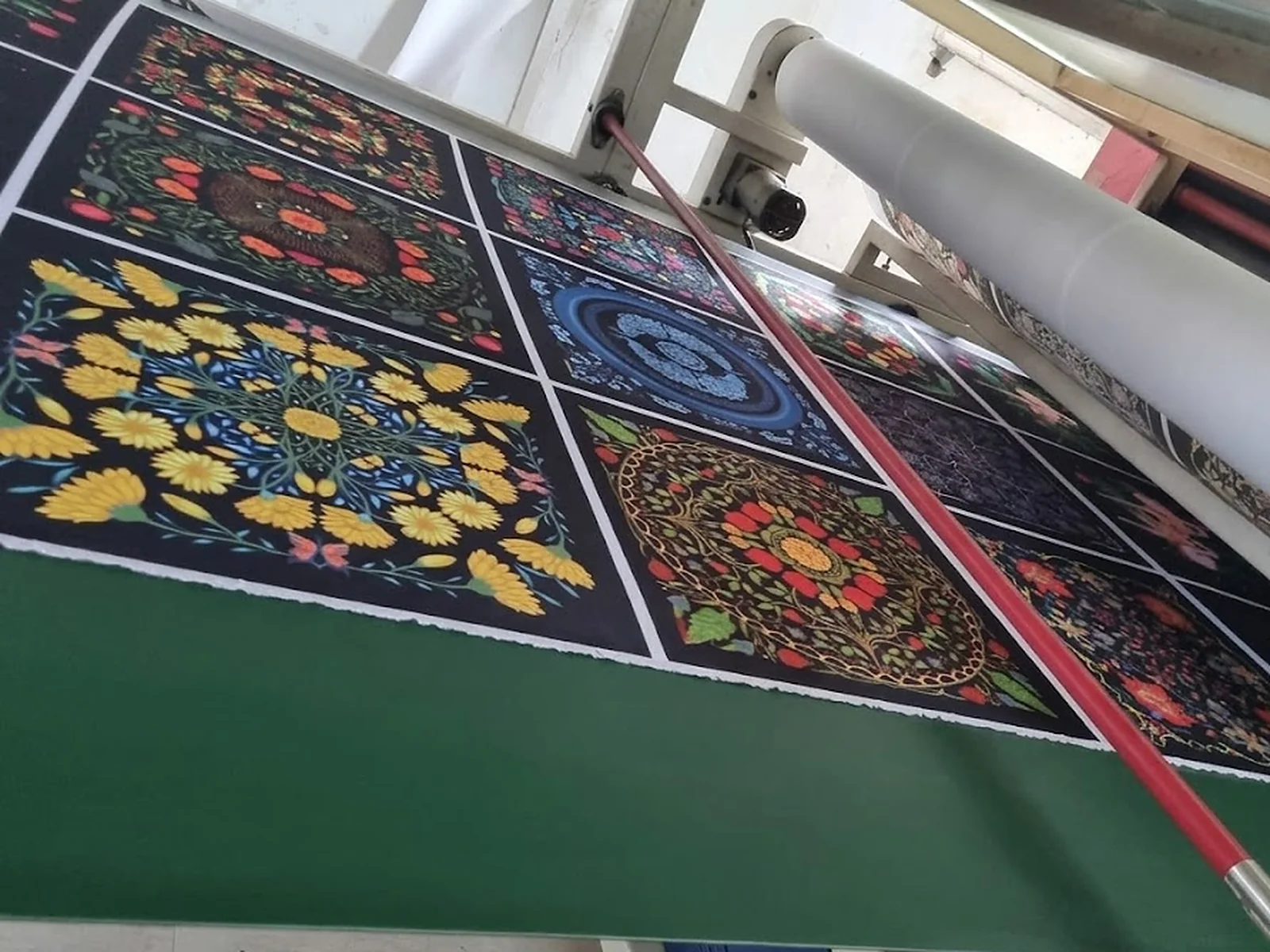
How is an engineered print different from running fabric?
An engineered print is planned around a known panel, while running fabric is printed first and cut wherever the cutter chooses. The first keeps motifs in place, and the second is more flexible across sizes.
What panel does each engineered product use?
For engineered print, the table below gives the figures. Cut sizes from our product data; a panel fits fabric only where its shorter side fits the usable width.
| Product | Cut panel | Panels across 44-inch | Panels across 58-inch |
|---|---|---|---|
| scarf | 92 × 92 cm | 1 | 1 |
| table runner | 36 × 186 cm | 3 | 3 |
| pocket square | 35 × 35 cm | 3 | 4 |
| bandana | 57 × 57 cm | 1 | 2 |
| apron | 75 × 95 cm | 1 | 1 |
| pooja cloth | 64 × 64 cm | 1 | 2 |
| hijab | 72 × 182 cm | 1 | 1 |
What products suit engineered printing?
Engineered printing suits products where the edges are the design: scarves with borders, saree pallus, table runners and kurti yokes. The table lists real cut panels for several of them.
What do you need to send for an engineered print?
For an engineered print, send artwork at cut size, the hem or seam allowance and a clear note of where the panel is folded or joined. A size set may need one file per size.