Home › Products › Saree printing › Polyester satin
Polyester satin saree printing
Custom sarees on polyester satin, printed by sublimation in Okhla, Delhi: one saree needs about 6.3 m. Fabric or ready-made.
Is polyester satin right for sarees?
Polyester satin suits sarees: it is one of the usual first choices for this job, it falls in fluid folds and it keeps the cost per piece low. Printed with sublimation: the brightest, sharpest colour of all; the dye is inside the fibre, so it cannot crack.
Trade-off: The high sheen can glare under strong light and shows every crease. If that matters, choose silk crepe for a matte look.
Design tips: Mark the pallu, border and blouse piece in the layout so each lands in its place on the length. On polyester satin, bright, saturated colours and dark grounds look glossy and rich.
Print your own design: send the artwork and the saree size, and we print a sample on polyester satin before the run. Order the printed fabric only, or ready sarees stitched in-house.
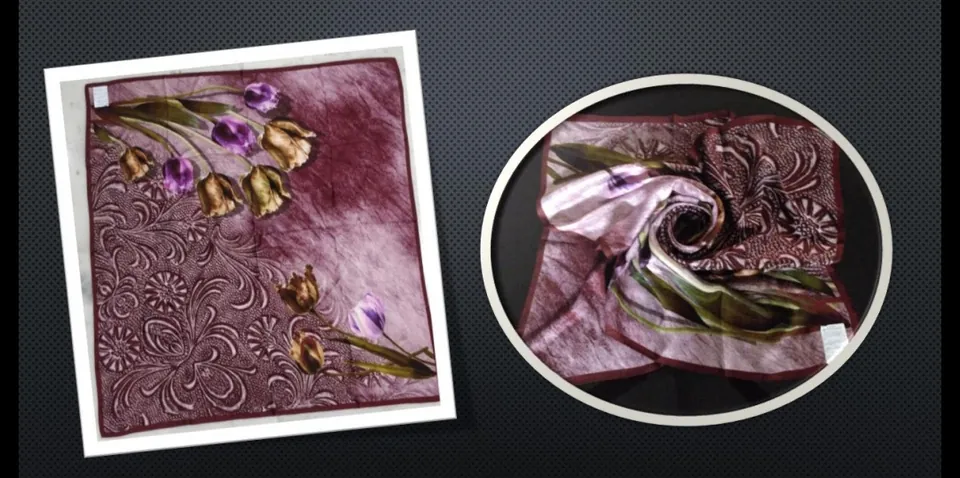
Sarees on polyester satin: size and yield
| Typical finished size | About 5.5 m plus a 0.8 m blouse piece, on 44-48 inch width |
|---|---|
| On 58-inch fabric (about 143 cm usable) | 3 m is a sample or strike-off length: one saree needs about 6.3 m |
| Fabric for 10 sarees | About 63.0 m of 58-inch fabric, before any extra for samples |
| Weight of fabric used per piece | About 835-1114 g per saree, before trims and packing |
| How it is counted | Basis: a saree is about 5.5 m plus a 0.8 m blouse piece, and the fabric width becomes the saree’s height, so the length decides the count. |
| Finishing options | Pico edge finishing, fall stitching, tassels on the pallu, folded and packed |
Polyester satin at a glance
| Hand-feel and drape | Smooth and slippery, with a fluid drape |
|---|---|
| Sheen | High sheen |
| Opacity | Opaque at typical weights |
| Typical weight / width | Typical 90-120 gsm; typical width 58″ |
| How the print looks | Sublimation: The brightest, sharpest colour of all; the dye is inside the fibre, so it cannot crack |
| Care | Cool machine wash; iron on the reverse on low heat |
| Good for | Scarves, scroll invitations, table flags, linings, pooja cloth, cushion covers |
| Not ideal for | Napkins and towels (low absorbency) |
How polyester satin meets what sarees need
| Weight: sarees work on very light to medium-weight fabric | Polyester satin is light, typical 90-120 gsm, inside that range. |
|---|---|
| Opacity: sarees can be sheer | Polyester satin is opaque with room to spare. |
| Drape: sarees handle best in a soft or fluid fabric | Polyester satin is fluid, a match. |
The 58-inch width of polyester satin gives about 143 cm across after selvedge, and that becomes the saree’s height.
Making sarees in polyester satin
Polyester satin is light, so it takes the usual saree finish without special handling: pico edge finishing. The high-sheen face of polyester satin shifts when cut and shows needle marks, so saree panels are best cut in single layers and stitched without unpicking. Polyester satin shows creases, so finished sarees are pressed before they are folded and packed.
What the print process means here
Sarees in polyester satin are printed by sublimation, the process for polyester: heat turns the dye to a gas that enters the fibre, so nothing sits on the surface to crack when the saree is folded. Polyester satin is opaque, so the reverse of a saree stays much paler than the printed face. The high-sheen face deepens dark shades, so dark-ground sarees look richest on polyester satin. Digital printing has no white ink, so any white in a saree design is the colour of the polyester satin itself.
Polyester satin or peach-finish polyester for sarees?
Against peach-finish polyester, polyester satin for sarees is high-sheen where peach-finish polyester is matte; and fluid in the hand where peach-finish polyester is soft. Pick polyester satin for a glossier and more fluid saree; pick peach-finish polyester for a more matte and firmer one. See peach-finish polyester sarees.
Other fabrics for sarees
- Peach-finish polyester saree printing: more matte and firmer than polyester satin
- Polyester crepe saree printing: sheerer and more matte than polyester satin
- Silk satin saree printing: sheerer than polyester satin
- Viscose rayon saree printing: sheerer and more matte than polyester satin
Specification
| Printing process | Sublimation on polyester (two Mimaki printers) |
|---|---|
| Fabrics | Polyester satin |
| Typical fabric weight | Typical 90-120 gsm (typical width 58″) |
| Sizes | About 5.5 m plus a 0.8 m blouse piece, on 44-48 inch width |
| Order as | Printed fabric only, or the ready finished product, stitched and packed in-house |
| Finishing options | Pico edge finishing, fall stitching, tassels on the pallu, folded and packed |
| Minimum order | From 3 metres of fabric, or a few sample pieces, including finished pieces |
| Turnaround | Sample first; sample and bulk dates are confirmed with your quote |
| Care | Cool machine wash; iron on the reverse on low heat. Sarees in polyester satin wash cool, dry fast and need little ironing. |
- Any MOQ — from 3 metres, or a few sample pieces
- Competitive per-metre pricing — ask for a quote
- In-house digital printing unit at S-73, Okhla Industrial Area Phase II, New Delhi, since 1996
- In-house tailoring: printed fabric only, or the ready stitched product
Frequently asked questions
Is polyester satin good for sarees?
Polyester satin suits sarees: it is one of the usual first choices for this job, it falls in fluid folds and it keeps the cost per piece low. The high sheen can glare under strong light and shows every crease.
How many sarees can I get from 3 metres of polyester satin?
On 58-inch fabric (about 143 cm usable): 3 m is a sample or strike-off length: one saree needs about 6.3 m. Fabric for 10 sarees: about 63.0 m of 58-inch fabric, before any extra for samples. Weight of fabric used per piece: about 835-1114 g per saree, before trims and packing. Sizes and yields are typical; we confirm them with your quote.
Can you deliver ready sarees in polyester satin, or only the printed fabric?
Both: our in-house tailoring stitches the sarees, or you take the printed polyester satin only. Polyester satin is light, so it takes the usual saree finish without special handling: pico edge finishing. The high-sheen face of polyester satin shifts when cut and shows needle marks, so saree panels are best cut in single layers and stitched without unpicking.
How do I wash a printed polyester satin saree?
Cool machine wash; iron on the reverse on low heat. Sarees in polyester satin wash cool, dry fast and need little ironing. Sublimated colour is inside the polyester fibre, so it does not crack or peel.
What can I use instead of polyester satin for sarees?
Silk crepe, for a matte look. Silk crepe is light, fluid silk with a fine pebbly feel.
How does polyester satin compare with polyester crepe for sarees?
Against polyester crepe, polyester satin for sarees is opaque where polyester crepe is semi-opaque; and high-sheen where polyester crepe is matte. Pick polyester satin for a more opaque and glossier saree; pick polyester crepe for a sheerer and more matte one.
What is the minimum order quantity for polyester satin sarees?
Any MOQ — from 3 metres, or a few sample pieces. For sarees in polyester satin, start with a 3 m strike-off or a single sample piece.
How is the price of polyester satin sarees worked out?
Competitive per-metre pricing, quoted for your design and quantity. For sarees, polyester satin sits in the lowest cost band of the bases we print, and ready sarees add stitching and finishing to the printed fabric.
Polyester satin sarees by use
Each page sets the size, quantity, finishing and care for one use.
Questions about saree and polyester satin
Get a quote for polyester satin sarees
Send your design, the size and the quantity. We reply with the price and a sample plan.
HM International
Okhla Industrial, S-73, Sanjay Colony II, Pocket Y, Sanjay Colony, Okhla Phase II, Area, New Delhi, Delhi 110020
| Monday | 10 am – 7 pm |
| Tuesday | 10 am – 7 pm |
| Wednesday | 10 am – 7 pm |
| Thursday | 10 am – 7 pm |
| Friday | 10 am – 7 pm |
| Saturday | 10 am – 7 pm |
| Sunday | Closed |