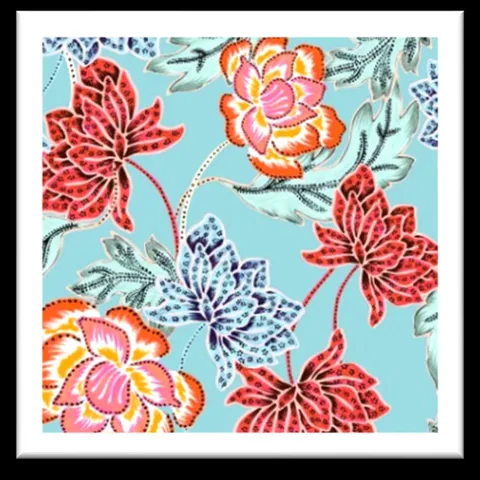
Why does a printed saree need pico?
A printed saree needs pico along any unfinished edge, particularly the pallu and light fabrics, since digital printing starts with cut lengths and no woven border to protect them. It also gives the edge a neat look.
How much of a printed saree goes where?
For pico and fall, the table below gives the figures. Computed from our product data for one saree, at the typical 6.3 m total.
| Part | Length | Share of length | Finish |
|---|---|---|---|
| Drape including pallu | 5.5 m | 87% | Pico on edges, fall stitched inside |
| Blouse piece | 0.8 m | 13% | Cut off and left unstitched |
Why does a saree need a fall?
A saree needs a fall because the lower edge meets the floor and takes wear. The strip protects the hem and adds a little weight, so soft crepes and other light drapes hang more evenly.
How does fabric length work on a printed saree?
A printed saree is usually planned as about 5.5 m of drape plus about 0.8 m of blouse piece, with pico and fall added on the 5.5 m. The pallu and the blouse piece are placed in the file on one continuous length.