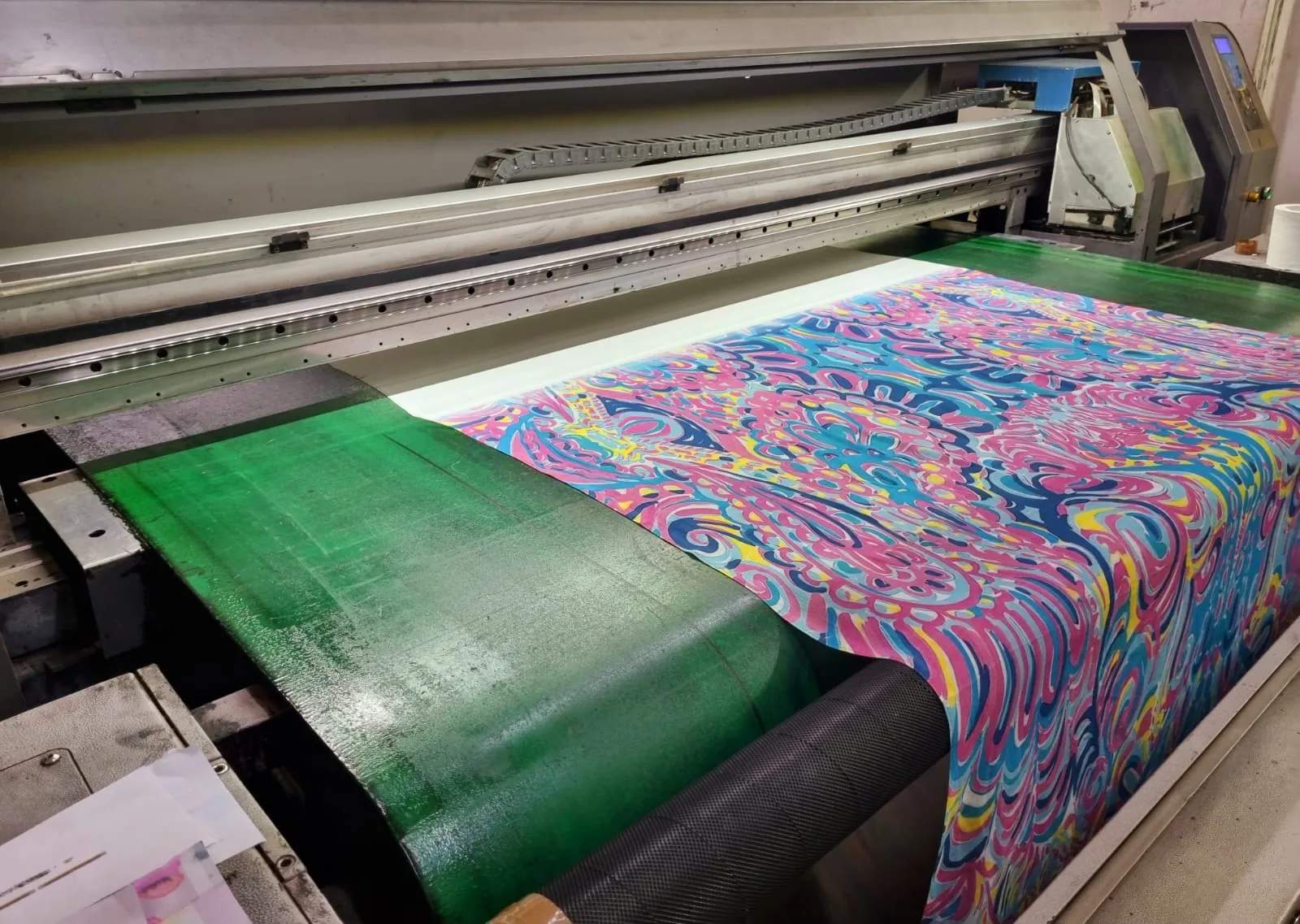
How does mul cotton take a print?
Mul cotton takes reactive dye as other cottons do, and its open weave lets colour reach the back. Thin lines and small text soften a little, so simple shapes and medium-sized motifs look best.
How does mul compare with the other light cottons?
For mul cotton, the table below sets it out. Mul is listed under cotton muslin in our data. Weights are typical.
| Fabric | Process | Typical weight | Widest typical width | Typical weight per metre | Opacity |
|---|---|---|---|---|---|
| Cotton muslin | Reactive | 60-90 gsm | 44-inch | 67-101 g | Sheer to semi-sheer |
| Cotton voile | Reactive | 60-80 gsm | 58-inch | 88-118 g | Sheer: light passes through |
| Cotton cambric | Reactive | 80-100 gsm | 58-inch | 118-147 g | Semi-opaque; pale garments may need a lining |
What should you watch with printed mul?
Printed mul can shift out of square because of its loose weave, both on the machine and in washing. Very exact geometry is a risk, and pale garments often need a lining.
What is mul used for?
Mul is used for light dupattas, turbans, pareos and baby wraps, because it is soft and breathes. It is a poor choice for anything structured, or anything that must hide what is behind it.