When does low opacity need a lining?
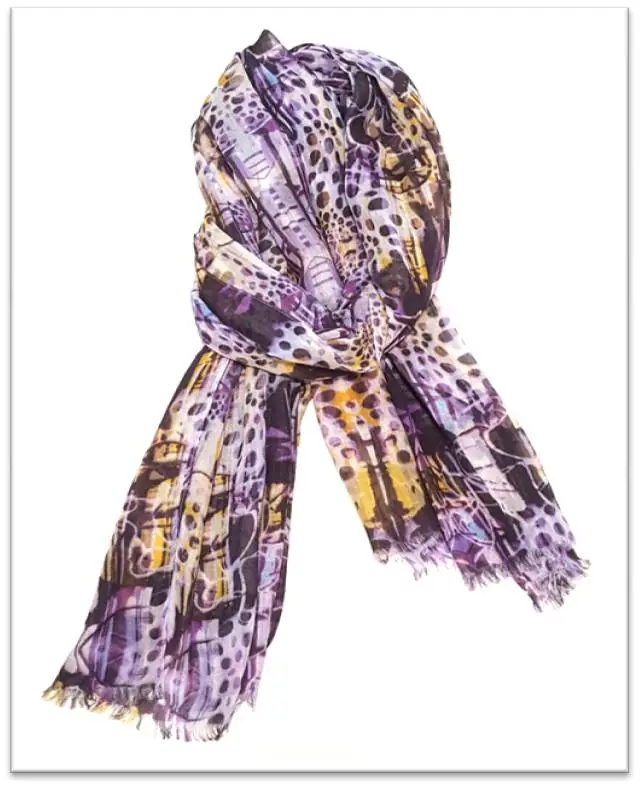
Low opacity needs a lining when the wearer or the seam behind it should stay hidden: pale kurtis, shirts and summer dresses in voile or cambric. Scarves and dupattas usually skip it, because sheerness is part of the look.
Which fabrics are sheer, semi-opaque or opaque?
For opacity, the table below gives the figures. Grouped from our fabric data for typical weights.
| Opacity | Fabrics | Count |
|---|---|---|
| Sheer | cotton voile, cotton muslin, silk habutai, polyester chiffon, knitted polyester | 5 |
| Semi-opaque | cotton cambric, viscose rayon, rayon crepe, modal, silk tabby, silk twill, silk satin, silk crepe, polyester crepe | 9 |
| Opaque | cotton poplin, cotton slub, cotton satin, cotton twill, cotton canvas, cotton lycra, linen, linen cotton, lyocell (Tencel), tussar silk, wool pashmina, polyester satin, peach-finish polyester, polyester roto, polyester spun, polyester canvas, polyester lycra | 17 |
How does opacity change a printed colour?
Opacity changes a printed colour because whatever sits behind a sheer cloth shows through, and a dark lining mutes the print. Test a pale print against the lining or skin it will sit on.
Is high opacity always better for curtains?
High opacity is not always better for curtains: sheers filter daylight well, while opaque fabric blocks it. For bedrooms, an opaque fabric or a blackout lining does what a sheer cannot.