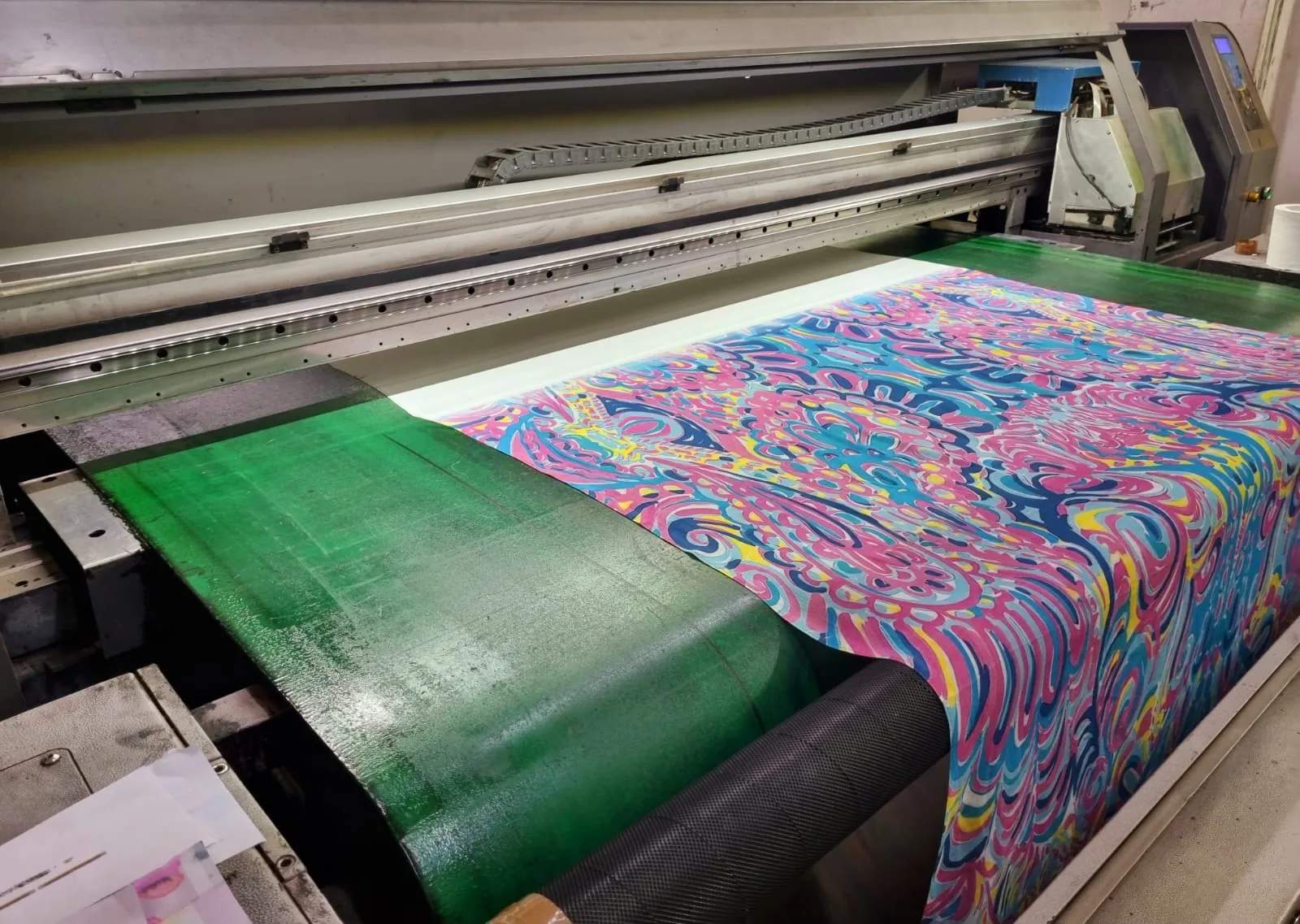
What does reactive digital printing change from reactive screen printing?
Reactive digital printing replaces the screens with print heads, while the dye still bonds to the fibre and still needs steam and a wash. What changes is that each colour needs no screen, so samples and short runs are easy.
How do the terms fit together?
For reactive and digital printing, the table below sets it out. Common print types, sorted by dye and by how the design is placed.
| Print type | Dye or ink | How it is placed | Screens needed |
|---|---|---|---|
| Reactive digital | Reactive | Inkjet from a file | None |
| Reactive rotary | Reactive | Rollers | One per colour |
| Sublimation | Disperse | Inkjet, then heat | None |
| Pigment digital | Pigment | Inkjet from a file | None |
| Pigment screen | Pigment | Flat screen or roller | One per colour |
Is all digital printing reactive?
Not all digital printing is reactive. Digital printers can place reactive dye, disperse dye or pigment, and the fibre decides which one fits. Our polyester goes by sublimation, for example.
Which is better, reactive or digital?
Reactive or digital is the wrong choice to weigh, as they are not opposites. Ask two things instead: which dye fits the fibre, and whether the run suits digital or a screen.