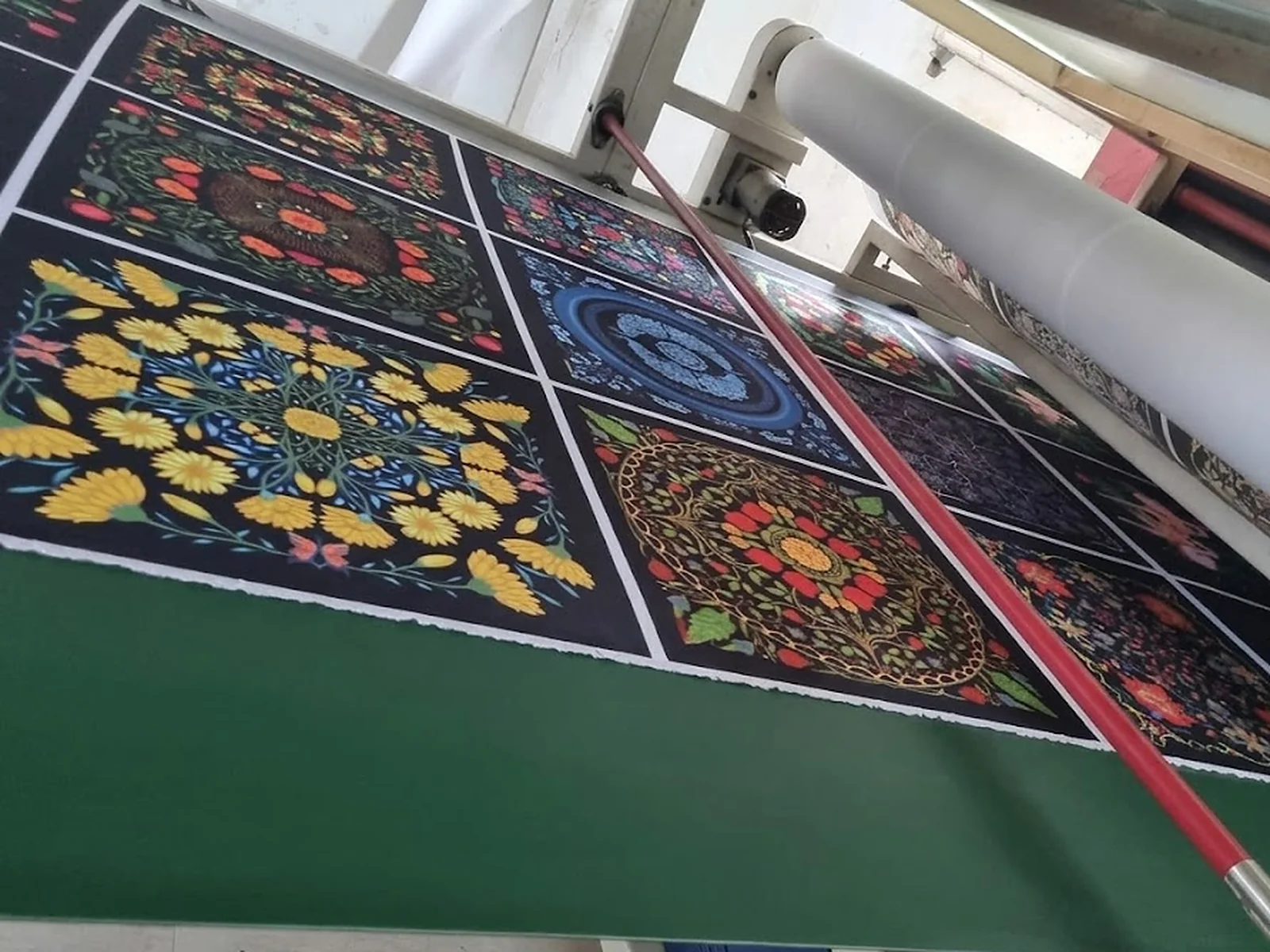
How does cylinder print work?
Cylinder print pushes dye paste through a seamless roller, with one roller per colour. Fabric runs below them at speed, which is why cylinder printing can be very economical once a long run has started.
How do digital and cylinder print compare?
For digital and cylinder printing, the table below sets it out. General differences, for planning. We run the digital route only.
| Point | Digital | Cylinder (rotary) |
|---|---|---|
| Set-up | File only | One roller per colour |
| Number of colours | Any number | Limited by the machine |
| Repeat | Free | Set by the roller |
| Short runs | Suited | Costly |
| Very long runs | Costs more per metre | Suited |
| Design changes | Easy | New rollers |
Where does digital printing win over cylinder?
Digital printing wins when a design has many colours or fine shading, and when each design is ordered in small amounts. It also lets you change colours between samples without any new rollers.
What limits repeat size in digital and cylinder print?
Cylinder print limits repeat size to the roller’s circumference, so the design must fit it. Digital printing has no roller, so a repeat can run long, and engineered panels can change along the length.