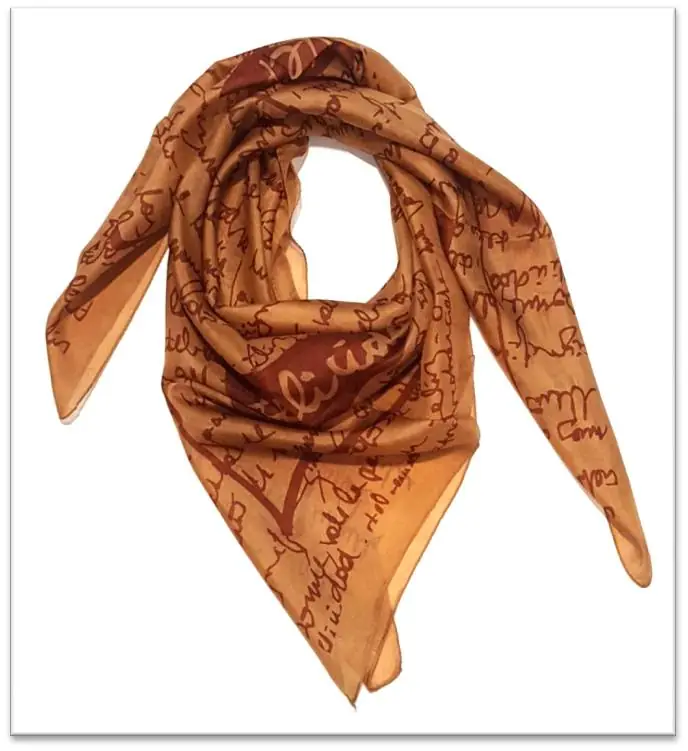
What does reactive printing mean for tussar silk?
On tussar silk: reactive dye bonds with tussar’s protein like other silks, but tussar is a wild silk with a natural gold base that stays under the print. For tussar silk, reactive printing means pre-treating the fabric, printing, steaming to fix the dye and washing out what did not bond.
Result on tussar silk: colour sits on a natural gold base, so whites read ivory and colours look warm.
What should you watch when printing on tussar silk?
When printing on tussar silk, the main point to watch is this: no printer can print white on tussar with dye, so whites read ivory and every colour shifts warmer; yarns are uneven too, so a sample matters. For artwork on tussar silk, warm palettes suit its golden base; skip designs that depend on a pure white ground.
How much does tussar silk weigh per metre?
Tussar silk is described in the trade as medium weight, and we hold no typical gsm figure for it, so the table gives its width and area only.
| Width | Usable | Area of 1 m | Area of 3 m |
|---|---|---|---|
| 44-inch | About 108 cm | About 1.12 square metres | About 3.35 square metres |
What can you make from 3 metres of tussar silk?
From 3 metres of tussar silk you can make the quantities below, computed from real cut sizes on 44-inch fabric. It suits sarees, dupattas, stoles, pooja cloth, and is not ideal for designs that need a pure white ground.
| Product | From 3 m of 44-inch |
|---|---|
| Scroll invitations | 20 |
| Pooja cloths | 4 |
| Sarees | sample length; order more for a full piece |
| Costumes | 1 |
| Scarves | 3 |
How do you care for printed tussar silk?
Printed tussar silk needs this care: dry clean. Hand: medium weight and slightly crisp, with a natural uneven texture. Opacity: opaque.