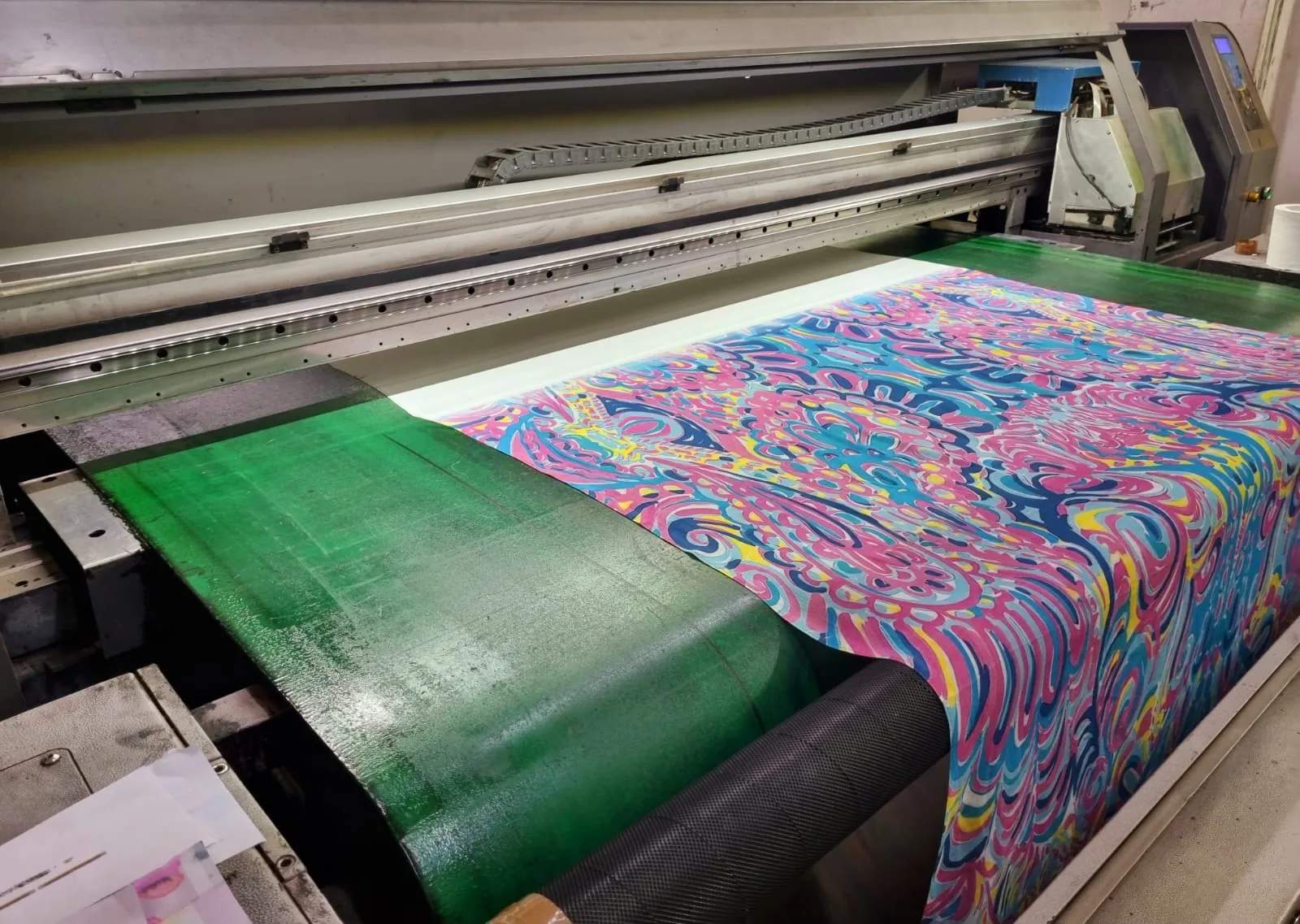
What does steam do to a reactive print?
Steam brings the printed fabric to about 100 °C with moisture, so dye moves from the thickener into the fibre and reacts with it. Saturated steam is used because the reaction needs water as well as heat.
Which print processes need steam?
For steaming after reactive printing, the table below gives the figures. General process comparison, and matches how we describe our own two processes.
| Process | Fibre | How colour is fixed | Wash-off needed? |
|---|---|---|---|
| Reactive | Cotton, linen, viscose, modal, lyocell, silk | Steam, with alkali from pre-treatment | Yes |
| Sublimation | Polyester | Dry heat, about 180-210 °C typically | No |
| Pigment | Cotton and many blends | Heat curing of a binder | No |
What happens if steaming is skipped or rushed?
When steaming is skipped or rushed, the colour stays weak and part of the dye never bonds. That loose dye then runs in wash-off, which is why a pale, patchy print can be a steaming fault and not a file fault.
Is all digitally printed fabric steamed?
Not all digitally printed fabric is steamed: reactive prints need it, while sublimation is fixed by dry heat and pigment by curing. So a fabric’s fibre decides whether steam comes into the process.