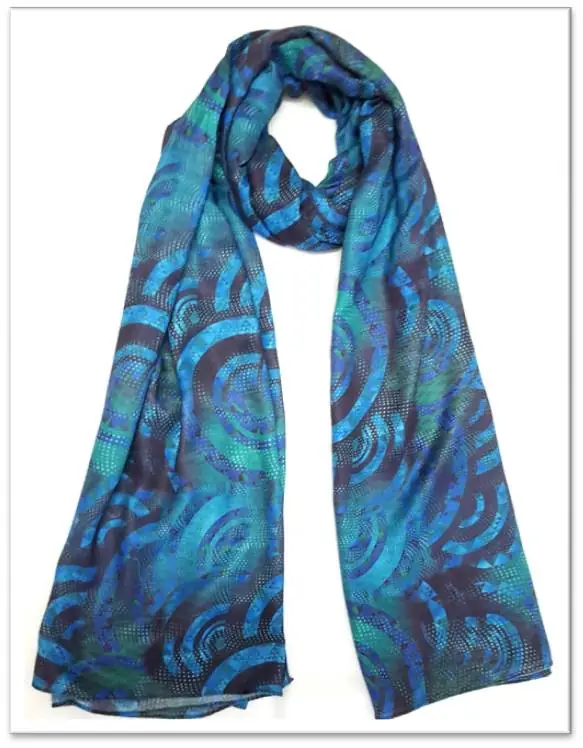
How do viscose, modal and lyocell differ when wet?
Viscose, modal and lyocell differ most in wet strength: viscose loses much of its strength when wet, modal holds more, and lyocell holds the most. That decides how gently each needs to be washed.
How do viscose, modal and lyocell compare?
For viscose, modal and lyocell, the table below gives the figures. From our fabric data; weights are typical.
| Point | Viscose rayon | Modal | Lyocell (Tencel) |
|---|---|---|---|
| Typical weight | 100-130 gsm | 100-130 gsm | 110-150 gsm |
| Hand | Soft, smooth and fluid; drapes and swings | Very soft, smooth and cool, with a fluid drape | Smooth, cool and fluid; stronger than viscose when wet |
| Bright, saturated colour, often brighter than the same print on cotton | Bright colour that stays bright after washing | Clean, deep colour | |
| Care | Hand wash or gentle cold wash; weak when wet, so do not wring | Gentle machine wash cold | Gentle machine wash cold |
| Good for | scarves, kurtis, kaftans, hijabs, nightwear | scarves, hijabs, nightwear, loungewear | shirts, kurtis, bedsheets, nightwear |
Do viscose, modal and lyocell print differently?
Viscose, modal and lyocell print similarly with reactive dye: all three give bright, clean colour with a soft hand. Differences come mainly from fabric construction and weight, and not from the fibre type.
Which of viscose, modal and lyocell should you use?
Use viscose for lower-cost fluid pieces, modal when softness matters and the item will be washed more, and lyocell for a smooth, stronger cloth at a higher cost. Bedding and shirts lean toward lyocell.