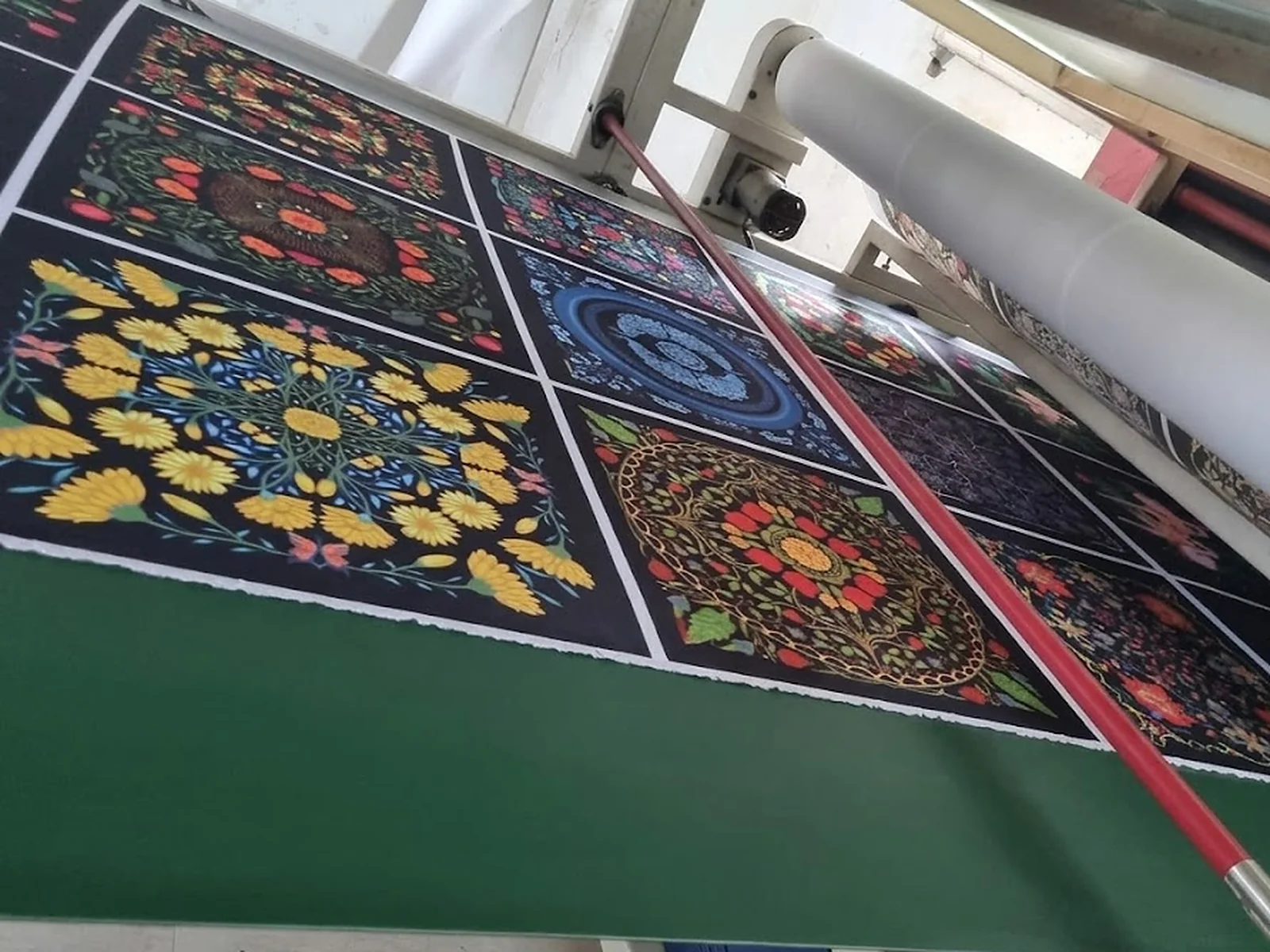
When is a thin cloth enough for double-sided fabric?
A thin cloth is enough for double-sided fabric when the design has no text. A knitted polyester or chiffon carries colour through, so the back looks close to the face, though reversed.
How much does the print show through on each fabric?
For double-sided fabric, the table below sets it out. Show-through comes from our fabric data. Weights are typical.
| Fabric | Process | Typical weight | Back of the cloth |
|---|---|---|---|
| Knitted polyester | Sublimation | 100-115 gsm | Shows design, mirrored |
| Polyester chiffon | Sublimation | 40-60 gsm | Shows design, mirrored |
| Cotton voile | Reactive | 60-80 gsm | Shows design, mirrored |
| Silk habutai | Reactive | 5-16 momme | Shows design, mirrored |
| Polyester spun | Sublimation | 120-180 gsm | Much paler |
| Polyester canvas | Sublimation | 200-300 gsm | Much paler |
Why join two layers for double-sided fabric?
Joining two layers makes double-sided fabric read correctly from each face, and the two designs can differ completely. The piece gets heavier, though, so it takes double the fabric and needs a light base.
Which products need double-sided fabric?
Double-sided fabric is common on flags, banners, table flags and reversible scarves. Tell us what the piece is, because the size and hem change how the two layers are joined.