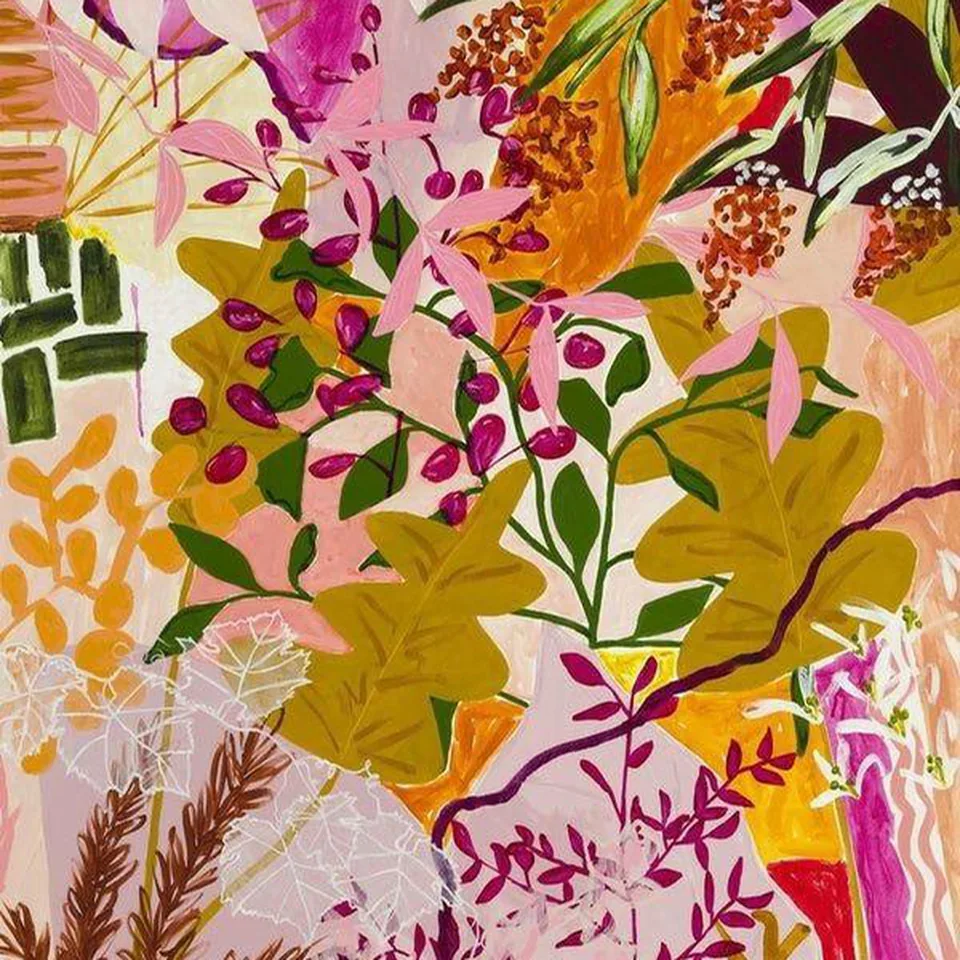
What does reactive printing mean for linen?
On linen: reactive dye bonds with linen cellulose as it does with cotton, but flax is more crystalline, so it takes colour less deeply and the result looks softer and more earthy. For linen, reactive printing means pre-treating the fabric, printing, steaming to fix the dye and washing out what did not bond.
Result on linen: slightly softer, earthy colour on the linen texture.
What should you watch when printing on linen?
When printing on linen, the main point to watch is this: linen’s natural base is rarely a true white, so pure whites and icy pastels read slightly warm. For artwork on linen, earthy palettes, botanicals and watercolours suit the natural slub; pure whites look slightly off-white.
How much does linen weigh per metre?
Linen weighs a typical 120-200 gsm, which is about 177-295 g per metre at 58 inches.
| Width | Usable | Typical weight per metre | Metres in 1 kg | 3 m weighs |
|---|---|---|---|---|
| 54-inch | About 133 cm | 165-274 g | 3.6-6.1 m | 0.49-0.82 kg |
| 58-inch | About 143 cm | 177-295 g | 3.4-5.7 m | 0.53-0.88 kg |
What can you make from 3 metres of linen?
From 3 metres of linen you can make the quantities below, computed from real cut sizes on 58-inch fabric. It suits shirts, napkins, table runners, kaftans, pocket squares, and is not ideal for items that must stay smooth and crease-free.
| Product | From 3 m of 58-inch |
|---|---|
| Napkins | 12 |
| Table runners | 3 |
| Curtains | 1 |
| Shirts | 1 |
| Kaftans | 1 |
| Pocket squares | 32 |
| Aprons | 4 |
| Cushion covers | 6 |
| Pet bandanas | 20 |
| Uniforms | 1 |
How do you care for printed linen?
Printed linen needs this care: gentle machine wash at 30-40 °C; iron while damp (linen creases). Hand: crisp, cool and breathable, with a natural slub. Opacity: mostly opaque; light linens show some light.