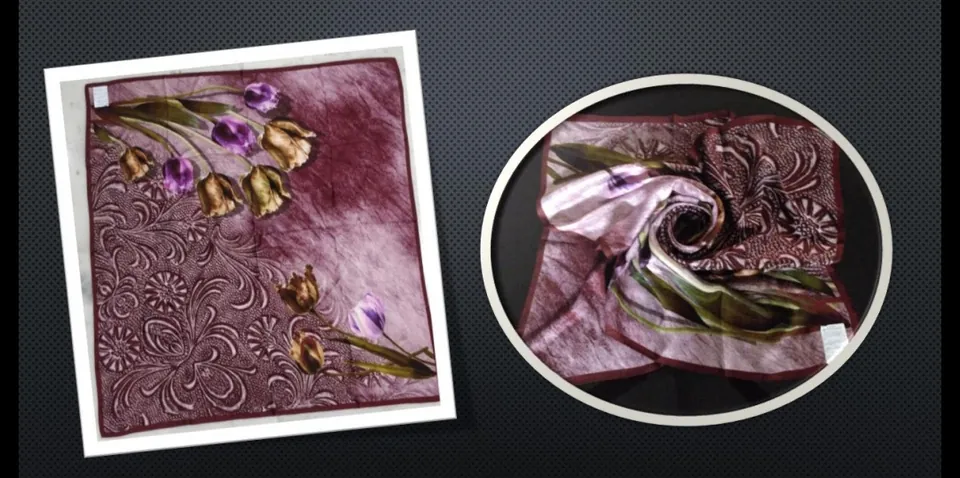
How does sheen change printed colour?
Sheen changes printed colour because reflected light adds depth to dark shades and makes them glow at some angles. The same navy on satin and on cotton poplin can look like two different colours.
Which fabrics are matte, lustrous or high-sheen?
For sheen, the table below gives the figures. Grouped from our fabric data.
| Sheen | Fabrics | Count |
|---|---|---|
| Matte or low | cotton poplin, cotton cambric, cotton voile, cotton slub, cotton twill, cotton canvas, cotton muslin, cotton lycra, linen, linen cotton, rayon crepe, silk tabby, silk crepe, wool pashmina, peach-finish polyester, polyester roto, polyester spun, polyester chiffon, polyester crepe, polyester canvas, knitted polyester | 21 |
| Soft lustre | cotton satin, viscose rayon, modal, lyocell (Tencel), silk habutai, silk twill, tussar silk, polyester lycra | 8 |
| High sheen | silk satin, polyester satin | 2 |
When is sheen a problem?
Sheen is a problem under strong lights and cameras, where it can glare and hide details: stage backdrops and event banners are the usual cases. A matte polyester spun avoids this and stays easy to read.
What gives a fabric its lustre?
Lustre comes from smooth, long filaments and from the weave: satin floats reflect most, plain weaves less, and spun yarns least. Silk’s triangular fibre section also gives it a particular natural glow.