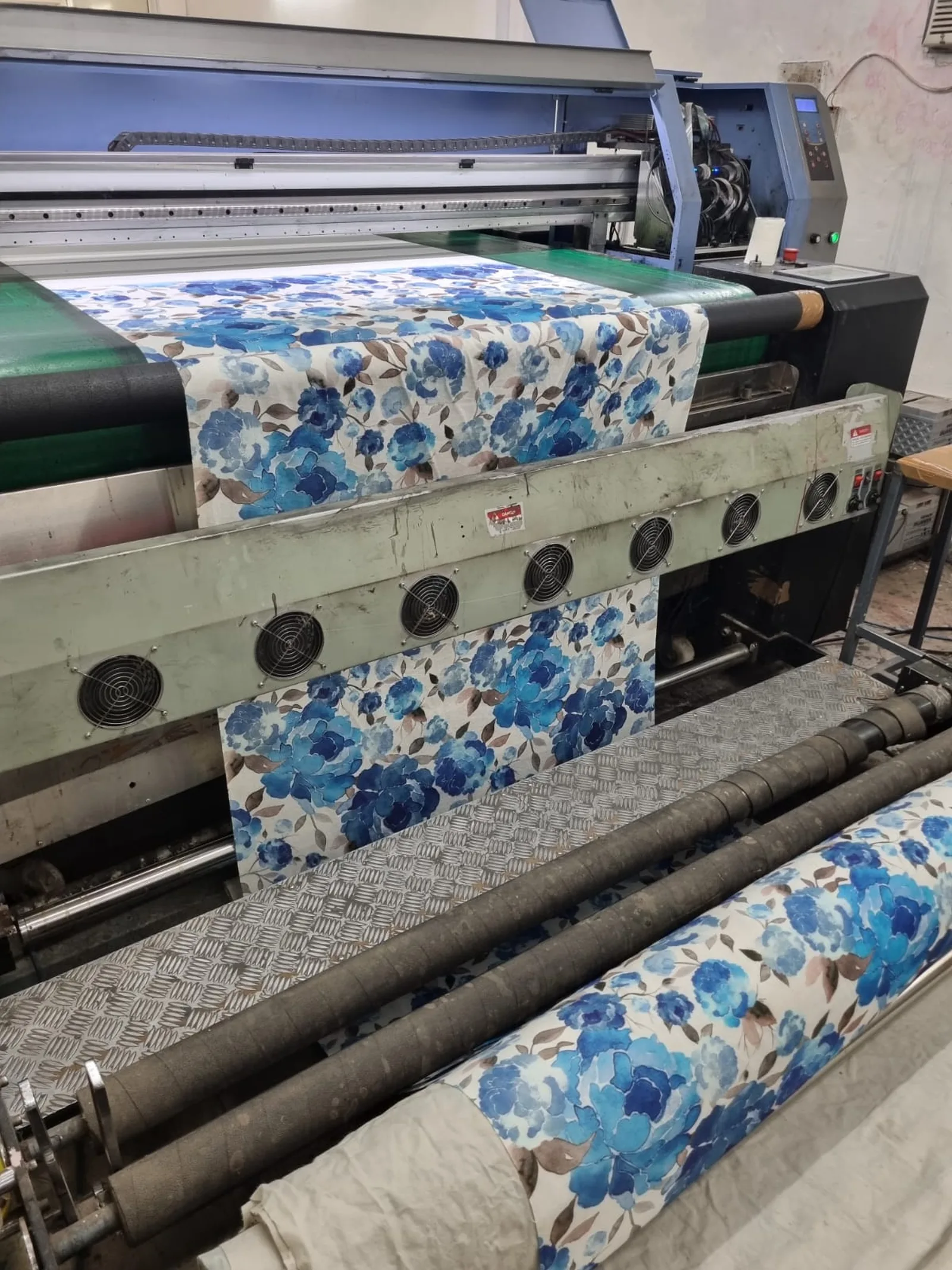
Why does an ICC profile depend on the fabric?
An ICC profile depends on the fabric because silk, cotton and polyester reflect and absorb ink differently. Profiles are built by printing charts on a specific base and measuring them, so a new base often needs its own.
What role does each step play?
For RIP software and ICC profiles, the table below gives the figures. A general outline of a textile printing workflow.
| Step | What it does | What it means for you |
|---|---|---|
| Design file | Holds your artwork and intended colour | Send the largest original |
| RIP software | Prepares the file for the printer | Handles repeats and layout |
| ICC profile | Maps colour for one fabric and ink set | Colour shifts with the fabric |
| Sample | Proves the result on cloth | Approve this, not the screen |
What does RIP software do for repeats?
RIP software can step a seamless tile across the width and down the length, without you supplying the entire run as one huge file. It also handles the scale, placement and the colour conversion on the way.
Do buyers need to know about RIP and ICC?
Buyers do not need RIP or ICC knowledge to order, though it helps to understand why a sample matters: the colour you approve is the result of the whole system, and not the file alone.