When is a hand-rolled hem worth it?
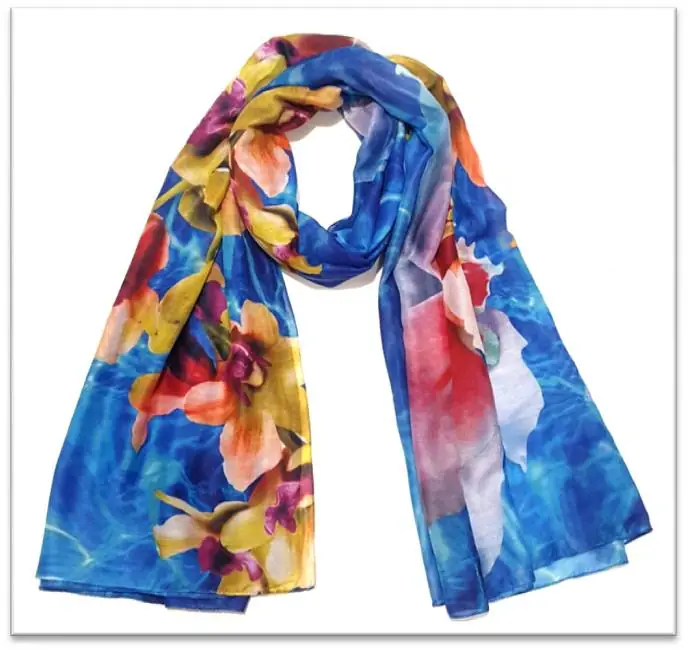
A hand-rolled hem is worth it on silk scarves and pocket squares, where the edge is seen and the piece sells on its finish. It takes longer than a machine edge and suits lighter fabric.
Which hem suits which piece?
For hem types, the table below gives the figures. Finishes offered in our product data; allowances are computed from real cut and finished sizes.
| Hem | Best for | Example from our sizes | Allowance per side |
|---|---|---|---|
| Hand-rolled or machine-rolled | Scarves, pocket squares | Scarf: 90 cm finished, cut 92 cm | 1 cm |
| Narrow hem | Bandanas | Bandana: 55 cm finished, cut 57 cm | 1 cm |
| Double-fold, mitred corners | Napkins | Napkin: 45 cm finished, cut 48 cm | 1.5 cm |
| Stitched edge with sleeve | Flags | Flag: 60 × 90 cm finished, cut 64 × 98 cm | 2 cm and 4 cm |
When does a double-fold hem make sense?
A double-fold hem makes sense on napkins, runners and aprons, because the raw edge is enclosed twice and survives laundering. It uses more allowance and looks too heavy on chiffon or voile.
Does a hem change how much artwork shows?
A hem changes how much artwork shows because every fold takes the printed area out of sight. That is why the same design is laid out differently at 90 cm finished on a scarf and at 45 cm finished on a napkin.