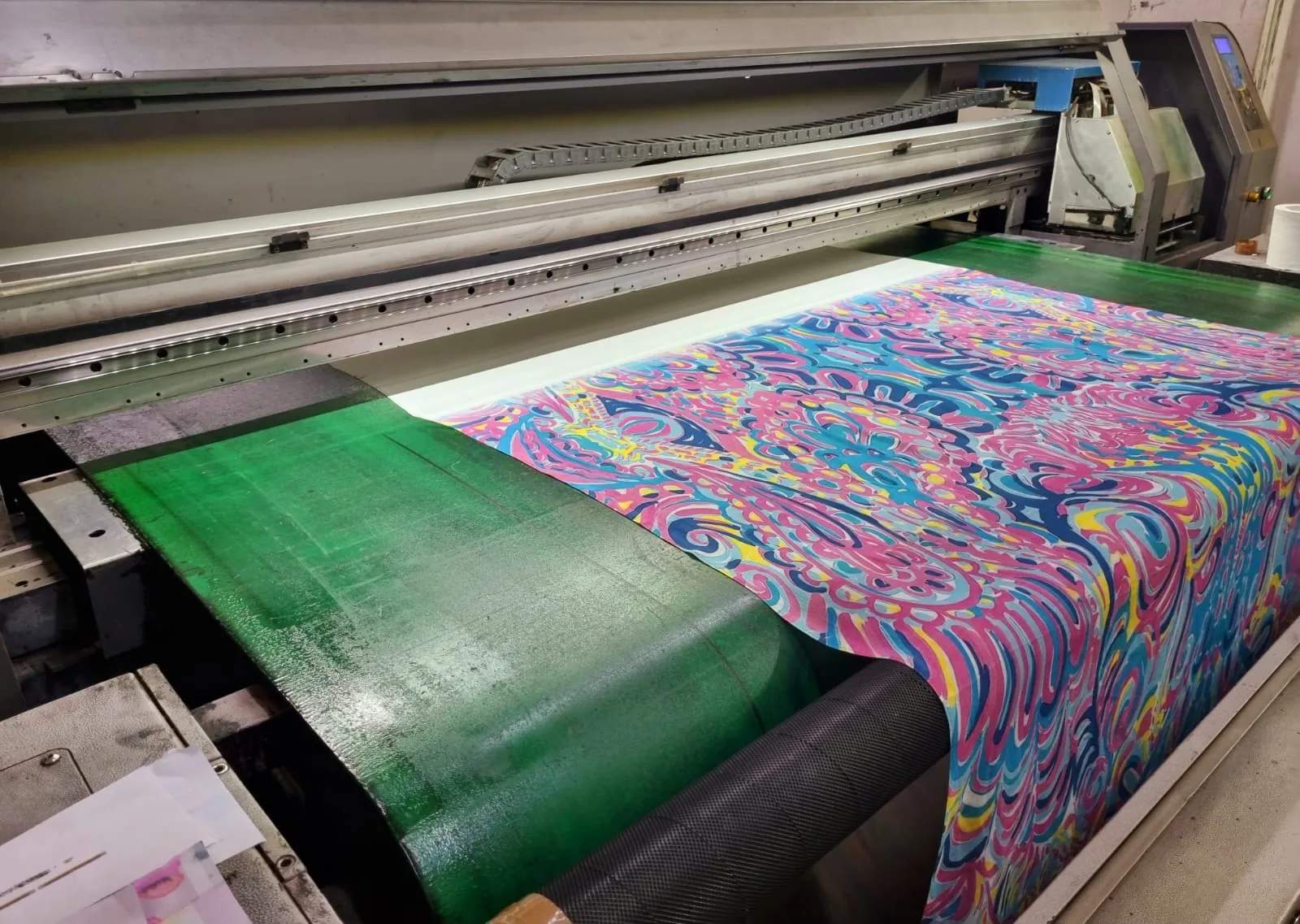
Why does weave change fine detail in a print?
Weave changes fine detail because each thread crossing is a small step on the surface. Poplin’s small, regular crossings hold thin lines, while twill’s diagonal and canvas’s coarse grain interrupt them.
How do poplin, twill and canvas compare?
For weave types, the table below gives the figures. From our fabric data; the weight per metre is computed at the widest typical width.
| Point | Cotton poplin | Cotton twill | Cotton canvas |
|---|---|---|---|
| Typical weight | 100-130 gsm | 180-250 gsm | 250-400 gsm |
| Typical weight per metre | 147-192 g | 265-368 g | 368-589 g |
| Hand | Smooth, firm and light; holds a neat, crisp shape | Firm and durable, with a diagonal weave | Heavy, stiff and strong |
| Clean, deep colour and fine line detail on the tight weave | Deep colour; very fine lines follow the diagonal slightly | Deep colour with a slightly textured look from the coarse weave | |
| Good for | shirts, kidswear, bedsheets, bandanas, quilt covers | aprons, uniforms, tote bags, upholstery, pet beds | tote bags, canvas art, upholstery, aprons |
Which cotton weave lasts longest?
A heavy twill or canvas weave lasts longest in hard use, which is why aprons, uniforms and bags use them. A lightweight poplin is better for shirts, because it is cool and neat.
How much do these weaves weigh per metre?
These weaves weigh quite differently per metre: canvas can weigh about three times as much as poplin at a similar width. The table computes this from typical weights, which also affects courier cost.