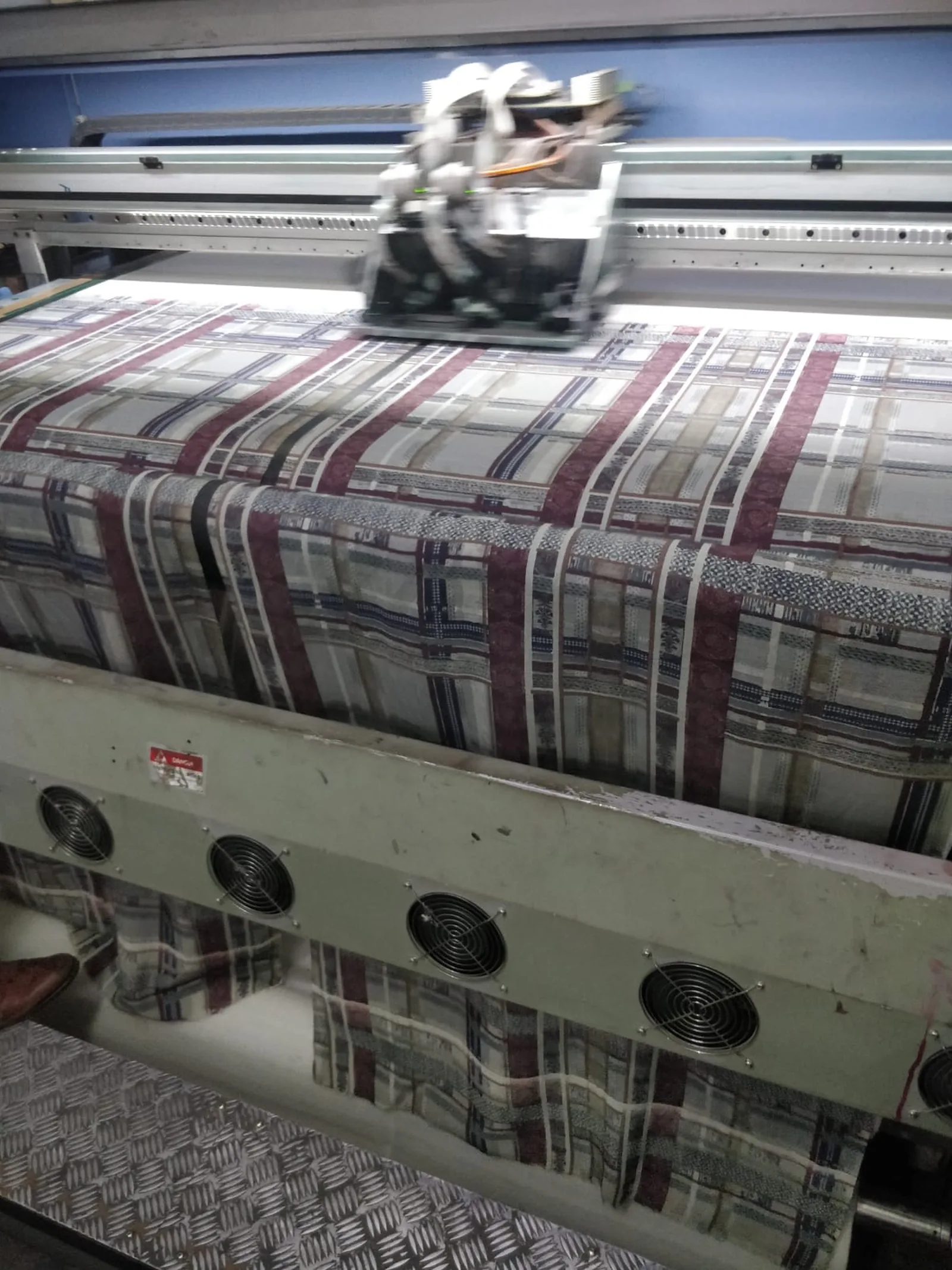
How do polyester and cotton stretch fabric differ?
Polyester stretch fabric suits sports and dance, because it sheds sweat, keeps its shape and washes easily. Cotton stretch fabric feels softer, absorbs moisture and suits kidswear, loungewear and fitted kurtis.
Which stretch fabric should you use?
For stretch fabric, the table below sets it out. Weights are typical, and counts are for one fabric on its widest width.
| Fabric | Process | Typical weight | Widest typical width | Typical weight per metre | Suits |
|---|---|---|---|---|---|
| Polyester lycra | Sublimation | 180-250 gsm | 58-inch | 265-368 g | sports jerseys, dance costumes, leggings |
| Cotton lycra | Reactive | 160-220 gsm | 58-inch | 236-324 g | kidswear, fitted kurtis, leggings, loungewear |
What should you watch when printing stretch fabric?
Stretch fabric can shrink or relax after printing, so size the pattern from a finished sample. Elastane is also sensitive to heat, which is why temperature matters when polyester lycra is fixed.
Should stretch fabric be cut before printing?
Stretch fabric is usually printed in panels or lengths, then cut. For a sports jersey, send the front, back and sleeves separately, so the print lines up across the seams.