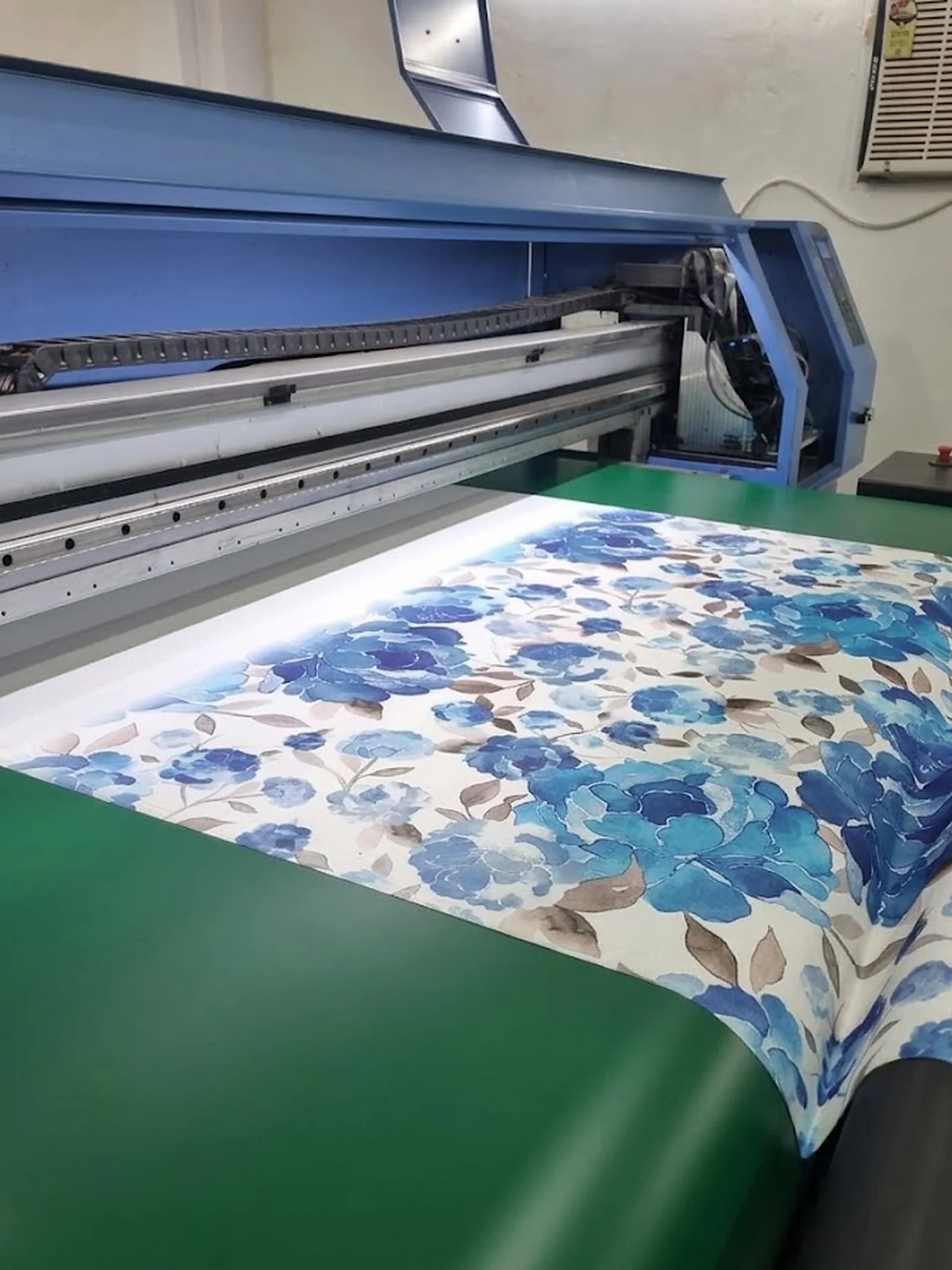
Which fabric shows digital print detail best?
A tight, smooth fabric shows digital print detail best, because each ink drop stays close to where it lands. Slub, muslin, canvas and crepe surfaces soften or break up very fine lines.
Which fabric suits which digital printing need?
For digital printing fabric, the table below sets it out. Picks come from our fabric data. Weights are typical.
| You want | Fabric | Process | Typical weight | Result on the cloth |
|---|---|---|---|---|
| Fine detail | Cotton poplin | Reactive | 100-130 gsm | Clean, deep colour and fine line detail on the tight weave |
| Small geometry on silk | Silk twill | Reactive | 12-16 momme | Very sharp detail and rich colour |
| Rich, glowing colour | Silk satin | Reactive | 16-22 momme | The most luminous colour we print; the sheen deepens dark shades |
| Soft drape | Viscose rayon | Reactive | 100-130 gsm | Bright, saturated colour, often brighter than the same print on cotton |
| Low cost, easy care | Polyester satin | Sublimation | 90-120 gsm | The brightest, sharpest colour of all; the dye is inside the fibre, so it cannot crack |
| Heavy body | Cotton canvas | Reactive | 250-400 gsm | Deep colour with a slightly textured look from the coarse weave |
| Stretch | Polyester lycra | Sublimation | 180-250 gsm | Bright colour that does not crack when stretched |
Which fabric gives the richest digital colour?
Satin-weave fabric gives the richest digital colour, whether in silk, cotton or polyester, because the face reflects more light. Viscose also looks bright, since the fibre absorbs dye readily.
How does end use change the digital printing fabric?
End use changes the fabric more than the print does. A digital print on voile can make a lovely dupatta and a poor cushion cover, so tell us what the fabric will become.