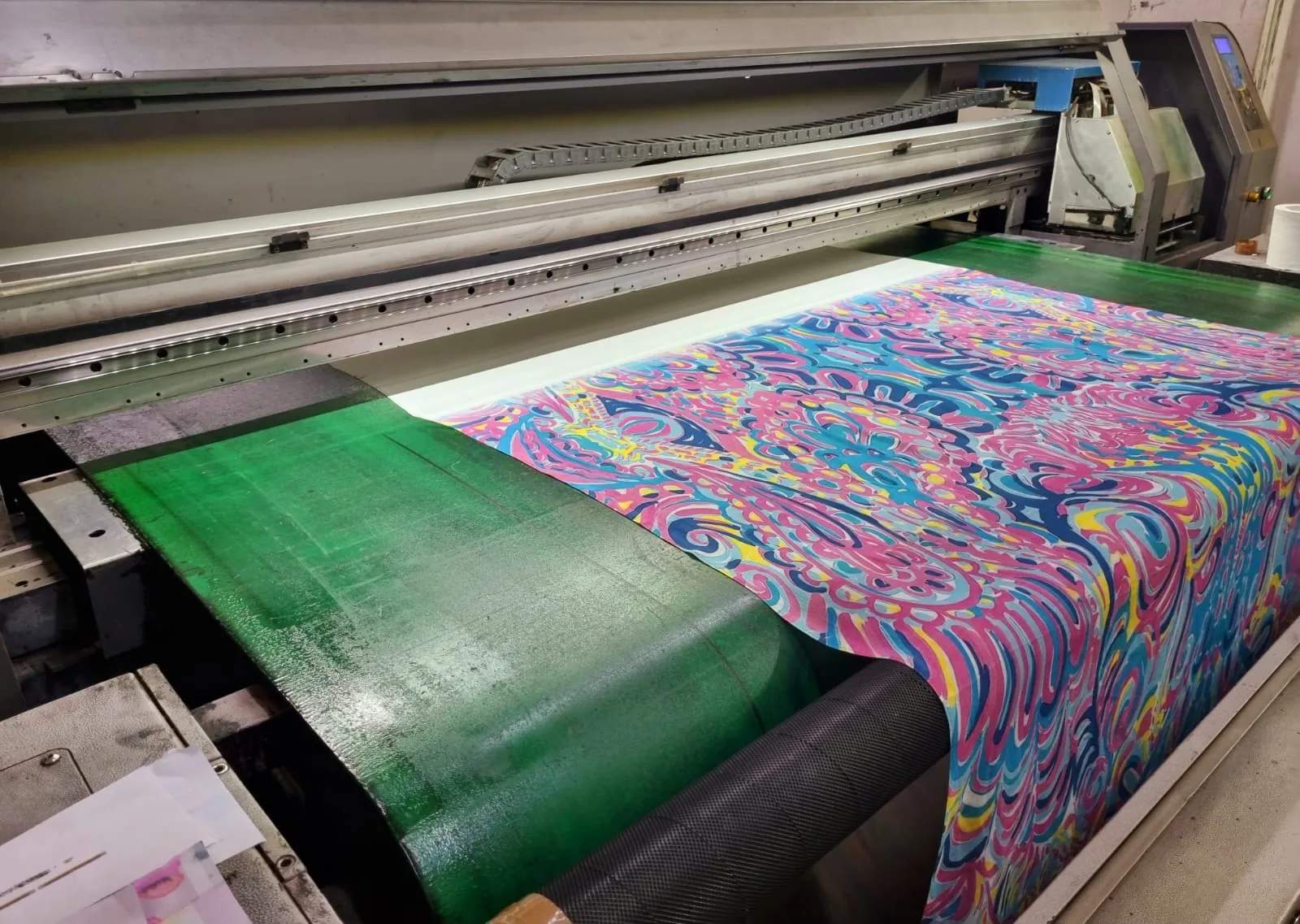
Which feels softer, reactive or pigment?
Reactive printing feels softer, because the dye bonds with the fibre and no film is left behind. Pigment printing uses a binder on the surface, so it can feel firmer, especially over large, dense areas of colour.
How do reactive and pigment printing compare?
For reactive and pigment printing, the table below gives the figures. General comparison, in line with how we describe both processes.
| Point | Reactive | Pigment |
|---|---|---|
| Fibres | Cotton, linen, viscose, modal, lyocell, silk | Cotton and many blends |
| How colour holds | Chemical bond with the fibre | Binder on the surface |
| After printing | Steam and wash | Heat cure |
| Feel | Fabric’s own hand | Can be slightly firmer |
| Colour | Bright and deep | Good, sometimes narrower |
Which has more colour, reactive or pigment?
Reactive printing usually gives the more vivid colour on natural fibres, because the dye sits in the fibre. Pigment colour has improved, though its range can be narrower on some fabrics.
Which process is simpler, reactive or pigment?
Pigment printing is simpler, because it needs only heat curing and no steaming or washing. Reactive printing needs both, which is why it costs more water and effort but leaves a softer print.