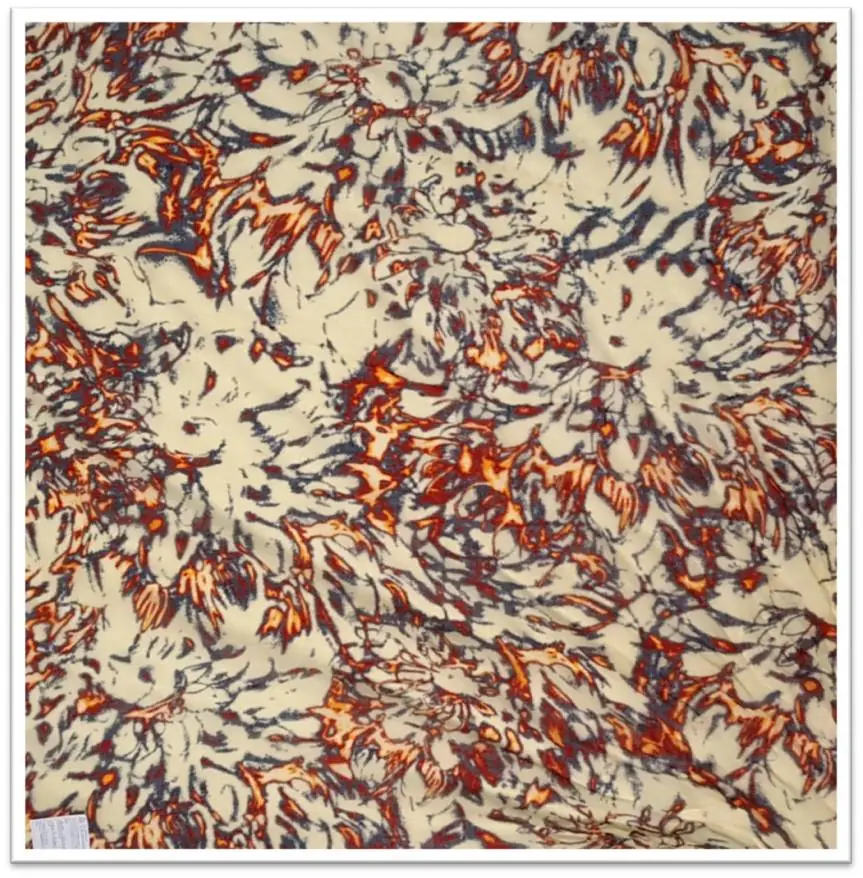
Which of voile, muslin and cambric holds fine detail?
Cambric holds fine detail best, voile holds it reasonably, and muslin softens it most, because the looser the weave, the more thin lines break up. Choose by whether your artwork relies on hairlines.
How do voile, muslin and cambric compare?
For voile, muslin and cambric, the table below gives the figures. From our fabric data; weights are typical.
| Point | Cotton voile | Cotton muslin | Cotton cambric |
|---|---|---|---|
| Typical weight | 60-80 gsm | 60-90 gsm | 80-100 gsm |
| Hand | Very light, airy and soft; drapes easily | Very light, loose and soft; gets softer with washing | Light, fine and soft; a little softer than poplin |
| Opacity | Sheer: light passes through | Sheer to semi-sheer | Semi-opaque; pale garments may need a lining |
| Soft colour that looks a shade lighter because the weave is open | Soft, slightly muted colour; very fine detail softens on the open weave | Soft hand with crisp small florals and fine lines | |
| Good for | dupattas, scarves, summer kurtis (with lining), turbans, sheer curtains | dupattas, turbans, bandanas, pareos, baby wraps | kurtis, kidswear, nightwear, pocket squares, handkerchiefs |
Which of voile, muslin and cambric is most see-through?
Voile and muslin are the most see-through, and cambric is only semi-opaque, so pale garments in any of them may need a lining. For a dupatta or a turban, that sheerness is often the point.
Which of voile, muslin and cambric lasts longest?
Cambric usually lasts longest in regular use, because its weave is closest. Muslin is the most delicate at cut edges, while voile sits between them and can snag if handled roughly.