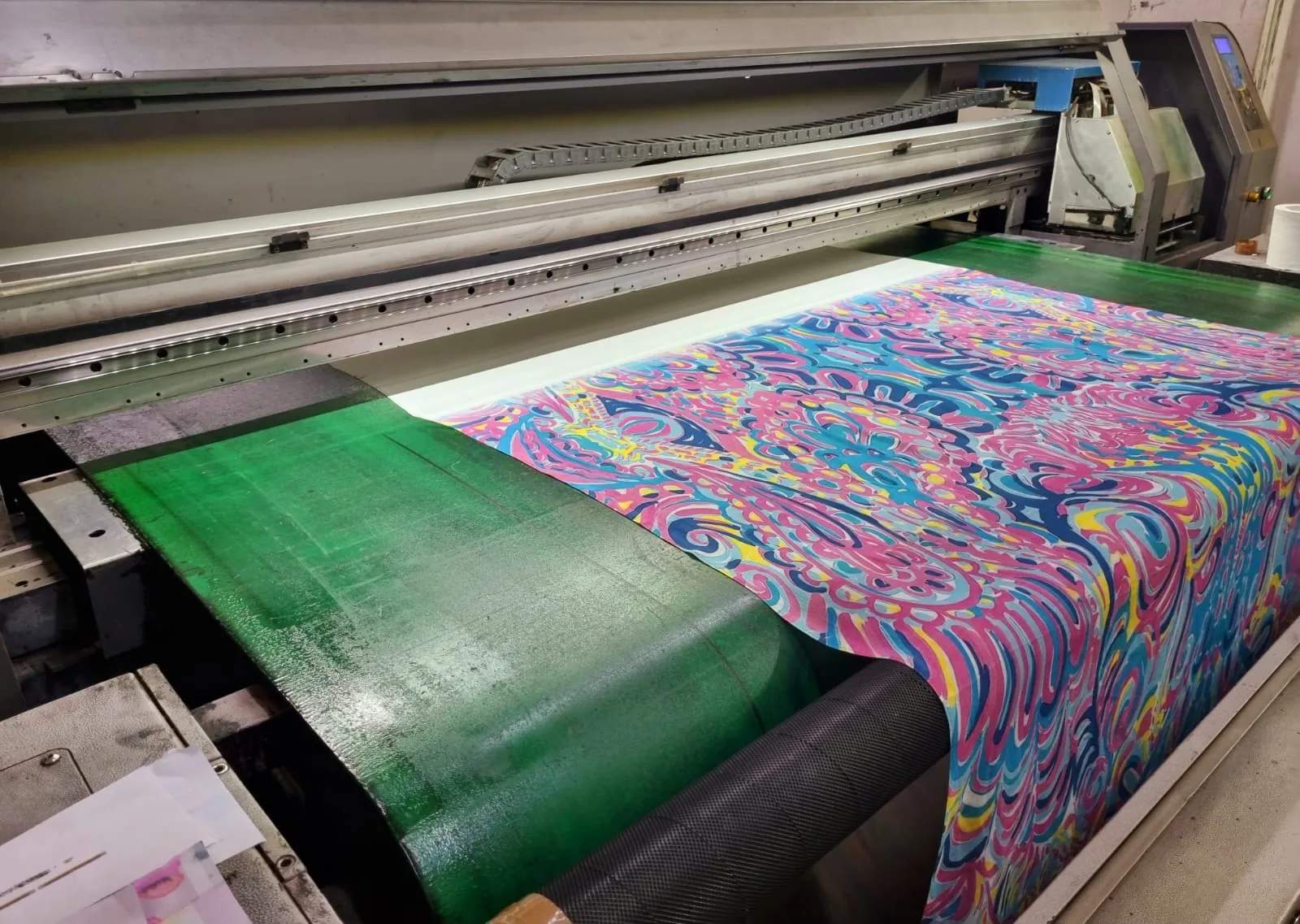
Why does mercerised cotton take colour better?
Mercerised cotton takes colour better because the treatment opens up the fibre’s structure, so more dye can reach and bond with the cellulose. Deep shades therefore need less dye for the same depth, and look richer.
How does mercerised cotton compare with ordinary cotton?
For mercerised cotton, the table below gives the figures. A general comparison, not a measurement of any one fabric.
| Point | Mercerised cotton | Unmercerised cotton |
|---|---|---|
| Lustre | Higher | Lower, more natural |
| Dye uptake | Higher | Standard |
| Strength | Usually higher | Standard |
| Processing | Extra step in preparation | None |
| Print result | Deeper colour | Softer colour |
How can you tell whether a cotton is mercerised?
Mercerised cotton is usually identified by the supplier’s specification and a slight lustre, though a light mill finish can look similar. Asking is more reliable than judging by eye, because a swatch test alone can mislead.
Is mercerised cotton always the better choice?
Mercerised cotton is the better choice for smooth, deep-coloured shirting, but it adds cost and a sheen that may not suit a rustic design. A casual print on slub cotton gains little from it.