Why does crepe print with soft edges?
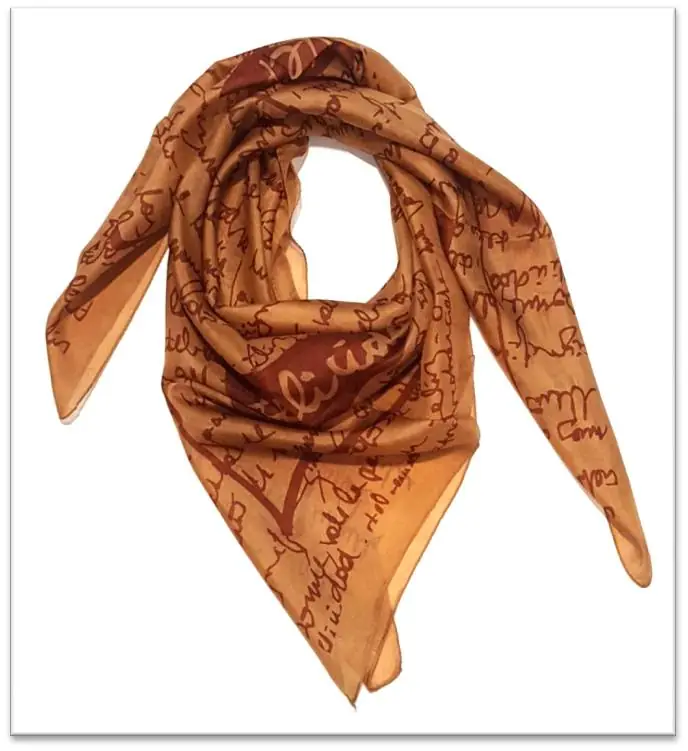
Crepe prints with soft edges because its grainy surface scatters light and breaks up very thin lines. Small all-over designs and painterly prints suit that surface well, while hairlines and small text look less crisp.
How do silk, rayon and polyester crepe compare?
For crepe, the table below gives the figures. From our fabric data; weights are typical.
| Point | Silk crepe | Rayon crepe | Polyester crepe |
|---|---|---|---|
| Typical weight | 12-16 momme | 110-140 gsm | 100-140 gsm |
| Process | Reactive | Reactive | Sublimation |
| Soft, rich colour without glare | Rich colour, slightly softened by the crepe grain | Bright colour, slightly softened by the crepe grain | |
| Care | Dry clean, or hand wash cold | Gentle cold wash or dry clean; may shrink if washed hot | Cool wash; cool iron |
| Good for | scarves, sarees, kaftans, blouses, furoshiki | kurtis, sarees, dupattas, kaftans | sarees, kurtis, hijabs, kaftans, furoshiki |
Does crepe shrink when washed?
Crepe made from silk or viscose can shrink when washed, because its high-twist yarns contract when wet. Polyester crepe is far steadier, which is one reason it is common for everyday sarees.
Which crepe should you choose?
Choose silk crepe for a rich, low-lustre luxury piece, rayon crepe for a soft natural-fibre feel, and polyester crepe for easy care at lower cost. The table sets out how they differ on the facts.