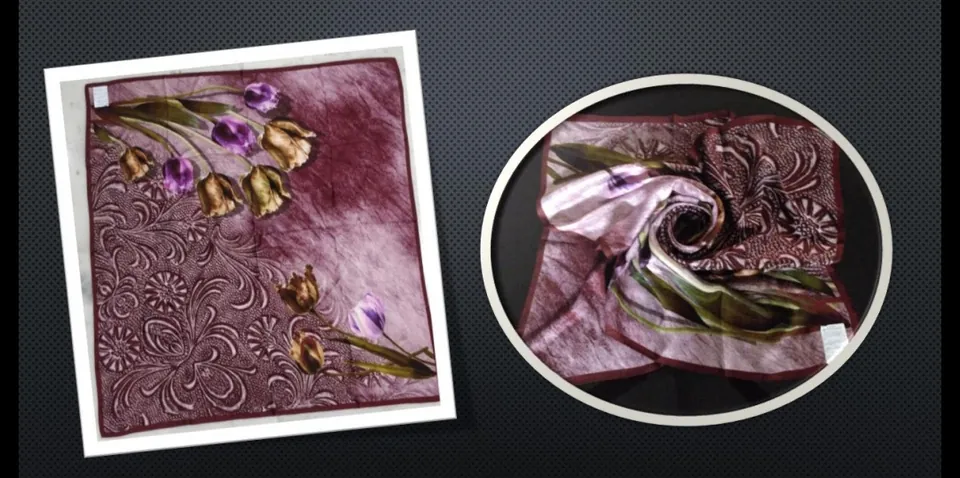
Why does satin shine more than sateen?
Satin shines more than sateen because long, smooth filaments reflect light in one direction, whereas cotton sateen is spun from short fibres and scatters more. The print on satin looks more saturated for the same reason.
How do polyester satin, silk satin and cotton sateen compare?
For satin and sateen, the table below gives the figures. From our fabric data; weights are typical.
| Point | polyester satin | silk satin | cotton sateen |
|---|---|---|---|
| Typical weight | 90-120 gsm | 16-22 momme | 120-160 gsm |
| Process | Sublimation | Reactive | Reactive |
| Sheen | High sheen | High lustre | Soft lustre on the face |
| Care | Cool machine wash; iron on the reverse on low heat | Dry clean | Machine wash at 30-40 °C inside out; iron on the reverse |
| Good for | scarves, scroll invitations, table flags, linings, pooja cloth, cushion covers | luxury scarves, sarees, pocket squares, ties, scroll invitations | bedsheets, quilt covers, cushion covers, nightwear |
Which is better for printed bedding, satin or sateen?
Cotton sateen is better for printed bedding because it absorbs moisture and takes repeated washing. Polyester satin feels slippery and warmer in sleep, and it shows creases on a bed.
Which process prints satin and sateen?
Sateen and silk satin are reactive printed, since cotton and silk take reactive dye, while polyester satin is printed by sublimation. Choosing the fibre also decides the process.