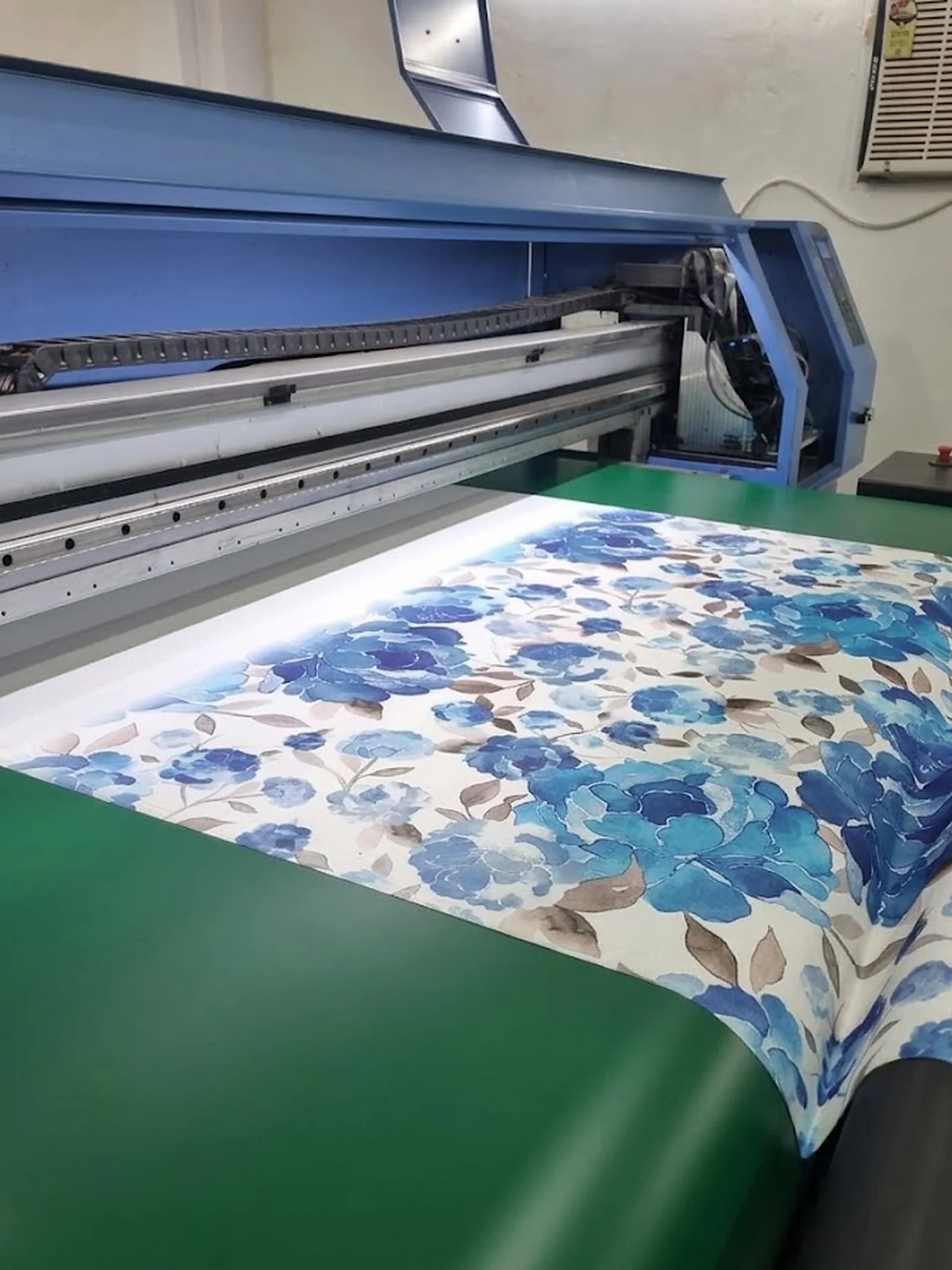
Why is pre-treatment needed for reactive printing?
Pre-treatment is needed for reactive printing because the ink itself is thin and holds no alkali. The thickener stops the drop spreading along the yarn and the alkali lets the dye bond with the fibre during steaming.
How does preparation differ by process?
For pre-treatment, the table below gives the figures. General process comparison.
| Process | Prepared fabric? | What the preparation does |
|---|---|---|
| Reactive | Yes: thickener and alkali | Keeps the edge sharp and lets the dye bond |
| Sublimation transfer | No: dye comes from printed paper | Paper carries the ink; heat moves it |
| Pigment | Depends on the system | Binder holds the colour on the surface |
What goes wrong with poor pre-treatment?
Poor pre-treatment shows as blurred edges, weak colour and uneven patches, since ink spreads and fixes unevenly. Silk and other sensitive fibres need a gentler recipe than cotton, because strong alkali harms them.
Can any fabric be printed without pre-treatment?
Fabric printed by sublimation transfer needs no pre-treatment of this kind, and many pigment inks carry their own binder. Reactive printing on untreated fabric gives poor, unfixed colour.