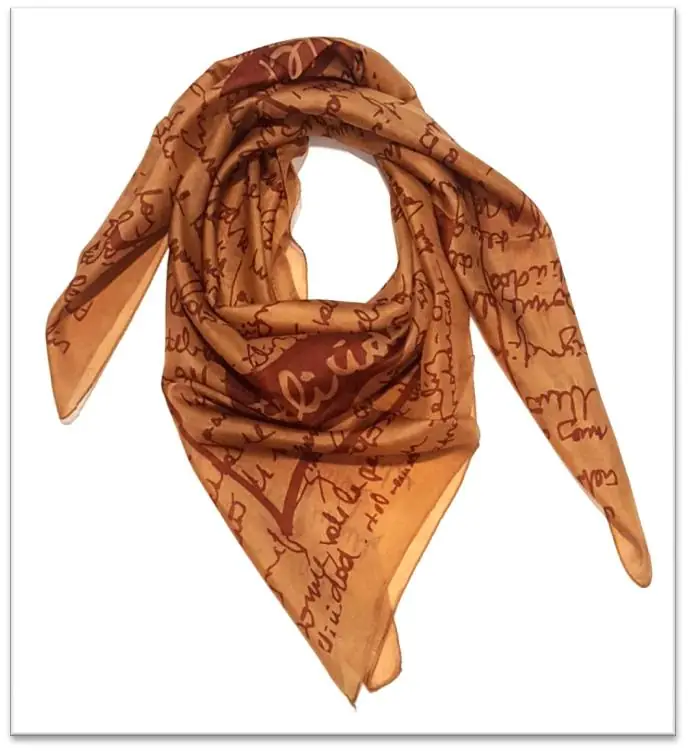
Silk takes colour beautifully and shows fine detail, which is why printed silk scarves and stoles are so popular. It also needs the right ink and after-treatment.
The ink: acid dyes or pigment
Silk is a protein fibre, like wool. It is usually printed with acid dyes, which bond with protein fibres and give bright, deep colour with no feel on the surface. Pigment inks can also be used where a simpler fixing process matters more than maximum brightness.
Steaming and washing
After printing with acid dyes, silk is steamed to fix the dye in the fibre and then washed to remove unfixed dye and any pre-treatment. Skipping or rushing these steps gives dull colour and bleeding in the wash, so ask your printer how they fix silk.
Weight and weave change the result
Light, open silks show a softer, slightly lighter print and the colour can be seen on the back; heavier and satin-weave silks give richer colour on the face. Approve colour on a sample of the exact quality you will use.
Silk qualities we work with
Mulberry, tussar, oak tussar, eri and muga, and blends such as silk and wool, and linen and silk. See silk digital printing.
Caring for printed silk
Follow the label. Where hand washing is allowed: cold water, a mild detergent, no wringing, and dry flat away from the sun. Full care guide.